2026 Top Air Cooling Chiller Options for Buyers?

In 2026, choosing an Air Cooling Chiller means balancing dependable cooling, energy use, and the realities of the installation site. An outdoor unit may sit beside a sunlit loading bay, where hot air, dust, and limited clearance affect performance. Buyers should compare more than nominal capacity. Check efficiency at the rating conditions, operating range, sound levels, service access, and controls compatibility. A low purchase price can look attractive. It may not tell the whole story.

The International Energy Agency’s 2018 report, The Future of Cooling, projected that global energy demand for space cooling could more than triple by 2050 without stronger efficiency measures. That forecast concerns space cooling broadly, not chiller sales, but it signals why operating costs deserve careful attention. For comparable performance figures, buyers can consult AHRI-certified ratings and the applicable AHRI 550/590 rating framework; real-site results still depend on climate, load, and maintenance. Energy-efficiency expert Amory Lovins is widely associated with the reminder, “The cheapest energy is the energy you don’t use.” It is a useful lens, not a substitute for a lifecycle-cost calculation.

This guide compares leading 2026 options by application, capacity, efficiency, and service considerations. It also flags trade-offs that brochures can soften, including high-ambient performance and installation constraints. Verify model-specific data with manufacturers and qualified HVAC professionals before purchase. Some selection details remain easy to overlook. Ambient temperature matters.
2026 Top Air Cooling Chiller Options for Buyers?

Define Air-Cooled Chillers by Heat-Rejection Method and Buyer Application

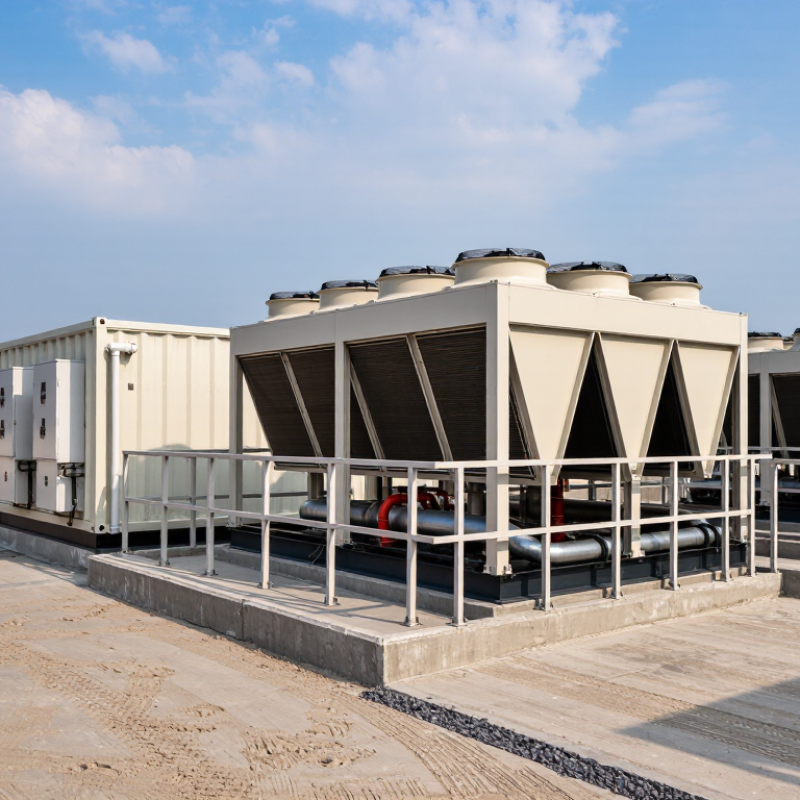
Air-cooled chillers reject heat through refrigerant coils and fans, sending it directly into outdoor air. This differs from water-cooled systems, which transfer heat to condenser water and typically need a cooling tower. The distinction changes more than the equipment list.

Air-cooled units avoid tower water and condenser-water pumps, making them practical for water-limited sites, smaller plants, and retrofits with tight mechanical-room space.

Application conditions matter.

AHRI Standard 550/590-2023 rates air-cooled chillers at a 95°F outdoor-air condition, giving buyers a common comparison point. It does not promise the same capacity on a hotter rooftop.

Check the selection data at the site’s summer design temperature, and allow space for unobstructed airflow around the coils. A dusty fin surface or a recirculating hot-air plume can weaken performance. Noise near offices or homes also deserves an early review.

That trade-off matters.

For a large campus with steady cooling loads, compare annual energy use and peak-weather output, not just purchase price.

I would also question any proposal that skips maintenance access; coil cleaning is easy to overlook, yet awkward access can make routine work less likely.

Classify 2026 Options by Capacity, Compressor Type, and Climate

Air-cooled chiller options are easier to compare when capacity comes first. Small loads often suit modular units with multiple scroll compressors. They can stage output as demand changes. Larger buildings may need screw-compressor equipment, especially when cooling runs for long hours. Match rated capacity to the design load, not just the floor area. A glass-walled office and a shaded workshop can behave very differently. Leave room for future expansion, but avoid buying excess capacity that cycles frequently.

Compressor type affects service and part-load performance. Scroll systems are comparatively simple and can offer useful redundancy when arranged in modules. Screw compressors are common in higher-capacity ranges and may handle varying loads efficiently when properly controlled. Ask for performance data at your actual operating conditions. A headline efficiency figure is not enough. Check minimum capacity, sound levels, and service access. Small details matter.

Climate changes the selection. In hot, dry regions, high outdoor temperatures can reduce available cooling capacity. Request certified performance data at the site’s expected peak temperature. Coastal air may call for corrosion-resistant coil protection. Cold winters require suitable controls to prevent freezing during low-ambient operation. These options can add cost. A tidy comparison chart may hide the assumptions behind its numbers, so review them carefully. And question the design point.

2026 Top Air Cooling Chiller Options for Buyers? - Classify 2026 Options by Capacity, Compressor Type, and Climate

Option Indicative Cooling Capacity Typical Compressor Type Climate Suitability Buyer Considerations
Compact, single-circuit unit 20–100 kW (about 6–28 refrigeration tons) One or more scroll compressors Mild to warm conditions; select a high-ambient-rated configuration for sustained hot weather. Often suited to small commercial buildings and process loads. Check minimum capacity, sound levels, and whether the unit has one or multiple refrigerant circuits.
Modular or multi-scroll unit 60–300 kW (about 17–85 refrigeration tons) Multiple staged scroll compressors Suitable for a broad range of climates when selected for the local outdoor design temperature; low-ambient controls may be needed for winter operation. Staging can match changing loads and provide partial capacity if a circuit is unavailable. Confirm module arrangement, water-flow requirements, and controls compatibility.
Medium-capacity screw unit 150–700 kW (about 43–199 refrigeration tons) Screw compressor, fixed-speed or capacity-controlled Can serve warm and hot climates with appropriate high-ambient selection. Performance and available capacity vary with outdoor temperature. Consider part-load performance, starting current, service access, and the unit’s published capacity at the project’s actual design conditions.
Variable-capacity screw unit 200–1,000 kW (about 57–284 refrigeration tons) Screw compressor with a variable-speed drive or other capacity-control system Useful in climates with substantial load variation; confirm operating limits and capacity at both peak and cooler outdoor conditions. May improve load matching when the system operates frequently at part load. Compare certified performance data, electrical requirements, and drive operating limits.
Large-frame air-cooled unit 500–1,500 kW (about 142–427 refrigeration tons), depending on configuration Typically multiple screw compressors; air-cooled centrifugal configurations are less common and availability varies For hot or mixed climates, verify the selected unit’s maximum ambient operating temperature and capacity at the site design point. Check footprint, airflow clearance, sound, electrical service, redundancy, and whether multiple smaller units would better meet the project’s reliability needs.

Capacity ranges are indicative market categories, not guarantees for every configuration. Actual cooling capacity and efficiency depend on chilled-water temperatures, outdoor design conditions, refrigerant, and unit options. Compare manufacturer selection data at the project’s specified conditions; 1 refrigeration ton is approximately 3.517 kW.

Compare AHRI 550/590 IPLV Using 1%, 42%, 45%, and 12% Load Weights

2026 Top Air Cooling Chiller Options for Buyers?

When comparing air-cooled chillers, AHRI 550/590 IPLV offers a consistent way to assess part-load performance. Its conventional weights are 1%, 42%, 45%, and 12% at 100%, 75%, 50%, and 25% load, respectively. The result is a weighted efficiency value, not a simple average of four readings. Small details matter. Check that each candidate uses the same rating conditions and efficiency units before comparing published IPLV figures.

The weighting gives most influence to operation at 75% and 50% load. That can make IPLV useful for buildings that spend many hours away from full capacity, such as offices with changing occupancy. Yet the profile is still a standardized assumption, not a forecast of your site’s exact year. A chiller may perform differently during hot afternoons, at low outdoor temperatures, or under unusually low loads. Ask for the individual efficiency points alongside IPLV, then compare them with your local weather data and expected operating schedule. I would not choose from one number alone; it is easy to overlook how often a system runs near its design peak.

2026 Buyer’s Guide: Air-Cooled Chillers | AHRI 550/590 IPLV Load Weights

Standard IPLV calculation weighting factors across four part-load points.

The weights are 1% at 100% load, 42% at 75% load, 45% at 50% load, and 12% at 25% load. They describe how the IPLV calculation weights each rating point—not chiller performance. Compare equipment using verified IPLV ratings in the same units and under the applicable AHRI edition.

Convert Efficiency Ratings: 1.0 kW/ton Equals a COP of 3.517

A rating of 1.0 kW per ton corresponds to a COP of 3.517. The conversion uses one refrigeration ton, equal to 3.517 kW of cooling, divided by 1.0 kW of electrical input. In simple terms, lower kW per ton and higher COP indicate better efficiency under the stated test conditions. Check the units carefully. A misplaced decimal can distort a comparison.

For air-cooled chillers, the rating is only a starting point. Outdoor temperature, leaving-water temperature, and load can all change actual performance. A unit rated at 1.0 kW per ton may use more power on a hot afternoon, when its fans and compressor work harder. Ask whether the figure includes condenser fans and which conditions the test used. Then compare part-load data, not just the full-load number. This comparison is useful, but not perfect. Real buildings rarely hold one steady load, and controls, water pumps, and installation details matter. When reviewing a 2026 shortlist, match ratings to your operating schedule and climate, and confirm the performance data with the supplier’s technical documentation.

Screen Refrigerants, Sound, Installation Needs, and Lifecycle Costs

For a 2026 air-cooled chiller purchase, compare refrigerants by more than availability. Check the refrigerant’s climate impact, operating pressure, service requirements, and compatibility with local rules. Ask suppliers for the charge size and leak-detection or handling requirements. A lower-impact option may still need different service procedures, so confirm that qualified technicians are accessible where the unit will operate. Small details matter. Review the stated capacity at your actual outdoor design temperature, not only at a convenient rating condition.

Sound and installation can rule out an otherwise efficient choice. Ask for sound data at realistic operating loads, then consider nearby windows, property lines, and night operation. Noise travels. Confirm that the site has adequate airflow, structural support, electrical capacity, and space for coil cleaning and component replacement. A unit squeezed against a wall may be harder to maintain and less effective. Compare lifecycle costs, including energy use, scheduled maintenance, refrigerant service, and likely downtime—not purchase price alone. Request assumptions behind any efficiency estimate, such as operating hours and load profile. I would still treat projections cautiously; real buildings rarely follow a perfect spreadsheet. That adds up.