Choosing an Anchor Drill Rig is a practical decision, not a brochure contest. The Global Infrastructure Hub’s Global Infrastructure Outlook (2017) projected a $15 trillion gap between global infrastructure investment needs and expected investment by 2040. That forecast is not a measure of anchor-rig sales. It does, however, underline why reliable ground-engineering equipment matters across infrastructure projects.
Ground conditions change the choice. A compact rig may suit a restricted slope site, while fractured rock or deeper anchoring can demand different torque, feed force, and flushing capacity. The Federal Highway Administration’s Soil Nail Walls Reference Manual (FHWA-NHI-14-007, 2015) discusses drilling methods and installation considerations for ground reinforcement. Its guidance reinforces a key point: match the rig to the geology and work method, not just the headline power rating.
Details matter. Check mast reach, transport width, compressor requirements, tooling compatibility, service access, and parts availability. Ask sellers for verifiable specifications and references from comparable ground conditions. A clean product photo cannot prove field performance. Neither can a claimed drilling speed without the formation and tooling details.
This 2026 guide compares seven rigs for sale using practical criteria, including application range, operating requirements, and support. “Best” is not universal. A strong machine can still be the wrong fit. Consider these selections a starting point, then confirm specifications with the manufacturer or dealer before purchase.
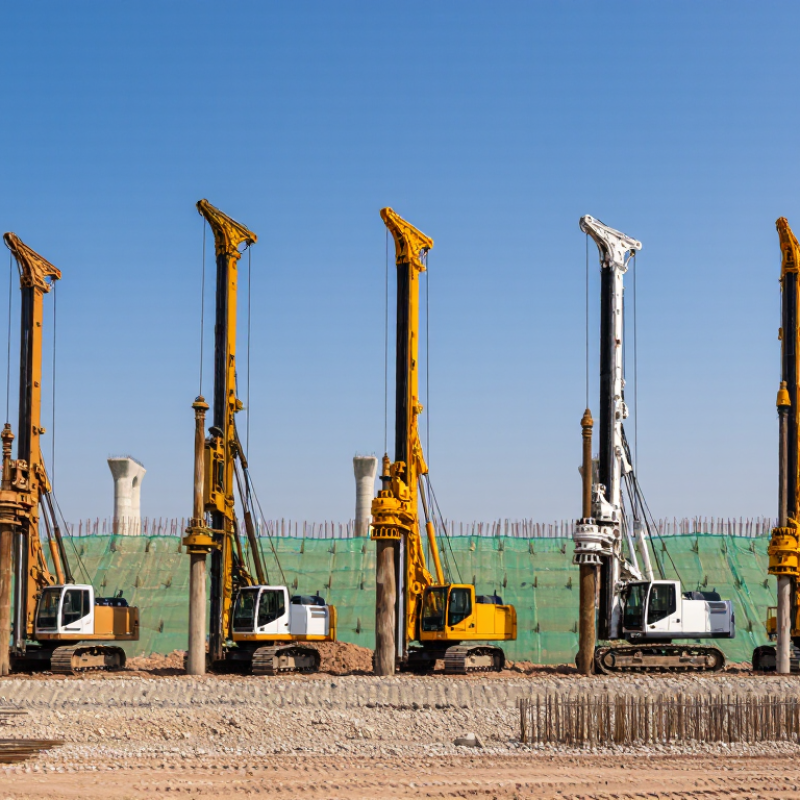
An anchor drill rig creates the boreholes used to install ground anchors in soil or rock. These anchors help stabilize retaining walls, slopes, excavations, and other structures. A typical rig has a frame, mast, power system, feed mechanism, and drill string fitted with a suitable bit. The mast can often be set at different angles to match the anchor design. Small adjustment, big difference.
During drilling, the motor turns the drill string while the feed system presses the bit into the ground. Depending on the rig and local conditions, air, water, or drilling fluid may carry cuttings back to the surface. Operators monitor pressure, rotation, and drilling speed because changing ground layers can affect the hole. Once the bore reaches its planned depth, crews insert the anchor and grout it in place. After the grout cures, the anchor may be tensioned and tested according to the project design. A capable rig still cannot compensate for poor ground information. Wet soil, loose gravel, and fractured rock may each call for different tooling, flushing methods, or access arrangements. And site conditions can surprise you. That part is easy to underestimate.
| Rig Type | Best Suited For | Typical Mounting | Common Drilling Method | Indicative Hole Diameter | Indicative Drilling Depth | Key Selection Consideration |
|---|---|---|---|---|---|---|
| 1. Compact crawler anchor rig | Residential slope stabilization, retaining walls, and restricted-access construction sites | Rubber-track or compact steel-track carrier | Hydraulic rotary-percussive drilling; casing can be used where the ground is unstable | Approximately 90–200 mm | Approximately 10–35 m | Check the rig’s working envelope, mast reach, transport width, and ability to work on uneven ground. |
| 2. Heavy-duty crawler rig | Large slope works, infrastructure projects, and production drilling for ground anchors | Heavy tracked carrier | Hydraulic rotary-percussive drilling with suitable rod, bit, and casing systems | Approximately 100–300 mm | Approximately 20–60 m | Compare feed force, torque, compressor or flushing requirements, and the rig’s ability to handle the specified anchor design. |
| 3. Top-hammer rock-anchor rig | Competent rock, rock-bolt installation, and shorter-to-medium rock-anchor holes | Usually crawler-mounted; some models use a compact carrier | Percussive top-hammer drilling, commonly with hollow drill rods for flushing | Approximately 45–127 mm | Approximately 5–30 m | Confirm the hole diameter, rock conditions, required flushing method, and compatibility with the anchor system. |
| 4. Down-the-hole (DTH) anchor rig | Hard rock and deeper holes where straightness and efficient rock penetration are priorities | Typically crawler-mounted | A pneumatic or hydraulic hammer operates near the drill bit; compressed air commonly clears cuttings | Approximately 90–250 mm | Approximately 15–60 m | Allow for compressor capacity, air supply, noise, dust management, and access for the required drill string. |
| 5. Rotary anchor drilling rig | Soil and mixed-ground applications requiring rotary drilling or larger-diameter holes | Tracked carrier, truck chassis, or dedicated drilling base | Rotary drilling with augers, casing, or other tooling selected for the ground conditions | Approximately 100–300 mm | Approximately 10–50 m | Match torque, rotation speed, tooling, and casing arrangement to the ground investigation and anchor specification. |
| 6. Truck-mounted anchor rig | Projects spread across multiple locations with good road and site access | Road-going truck chassis | Rotary or rotary-percussive drilling, depending on the installed drilling package | Approximately 100–300 mm | Approximately 15–50 m | Check road transport limits, setup space, stabilizers, and whether the truck can reach the actual drilling position. |
| 7. Portable split-frame anchor rig | Basements, tunnels, indoor work, and sites where a complete crawler rig cannot enter | Modular frame assembled at the work area; power pack positioned separately | Hydraulic rotary or rotary-percussive drilling, selected for the ground and access conditions | Approximately 76–200 mm | Approximately 5–30 m | Evaluate component weights, assembly time, available power, overhead clearance, and room for rods and spoil handling. |
| How anchor drill rigs work: A rig applies rotation, percussion, or both to a drill string and bit to create a hole for a ground anchor or related reinforcement. Depending on ground conditions, casing, air, water, or drilling fluid may be used to support the hole and remove cuttings. After drilling, the specified anchor is installed and grouted or otherwise secured according to the engineered design. | ||||||
| Buying note: The diameter and depth figures above are indicative ranges for rig categories, not guaranteed specifications for individual machines. Actual performance depends on the rig configuration, tooling, geology, access, flushing system, and project requirements. Verify the manufacturer’s data sheet and consult the project’s geotechnical and structural specifications before purchase. | ||||||
