How to Use a Back Stretcher Board?
A Back Stretcher Board can look simple: a curved platform, a few height settings, and a place to rest your back. Using it well takes more care. The board changes the shape of your posture, so a strong stretch is not automatically a better stretch. Spine biomechanics researcher Dr. Stuart McGill’s work emphasizes that spinal structures and movements differ. A practical paraphrase of that principle is: “Treat each movement as individual, not one-size-fits-all.” This is a guiding summary, not a verified direct quotation.
In this guide, you’ll learn how to position the board, choose a starting arch, and ease into a short session. Picture your feet planted on the floor, your shoulders settling gradually, and your breathing staying even. Begin with the lowest setting, if your board allows it. Stop if you feel sharp pain, numbness, or symptoms that travel down a leg. A mild stretch may be expected; pain is not a useful goal.
Small steps matter. Really. Back discomfort has many possible causes, and a stretcher board cannot identify or treat them all. If symptoms are severe, persistent, or worsening, seek guidance from a qualified health professional before continuing. A board may feel helpful for some people, but your response can vary from day to day. Keep that uncertainty in view. The steps ahead focus on controlled use, sensible limits, and noticing how your body responds.
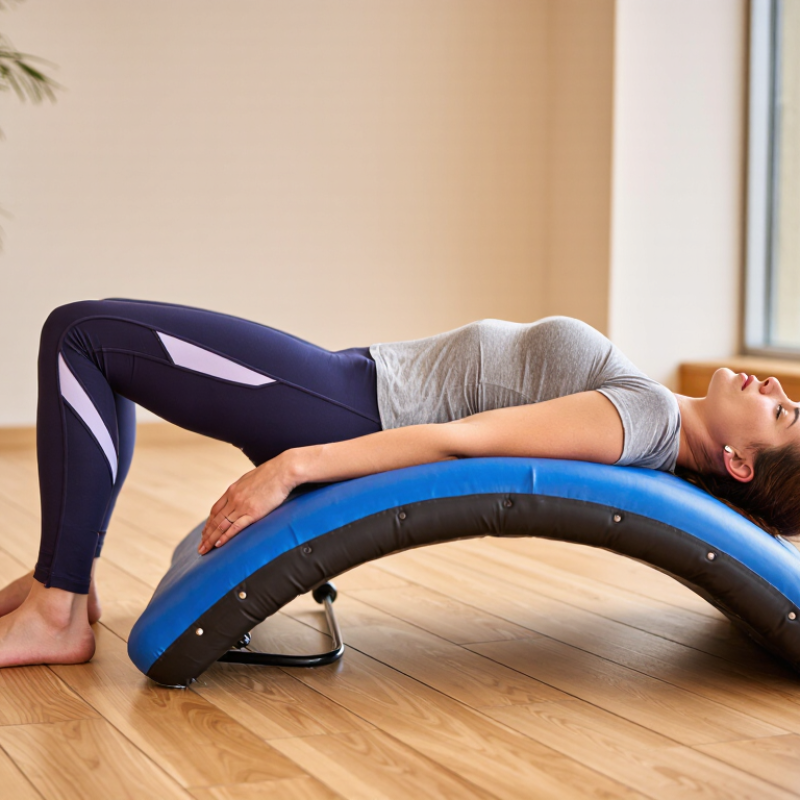
Understanding the Back Stretcher Board and Its Features
How to Use a Back Stretcher Board?
Understanding the Back Stretcher Board and Its Features
A back stretcher board is a curved support designed to position the spine in gentle extension. Many models offer adjustable arch levels, textured contact points, and side handles. The lowest arch usually provides a milder starting position. Check that the board sits flat on a firm floor and does not rock. Features vary, so read the maker’s instructions before use. A useful reality check: equipment alone does not establish that a stretch is suitable for everyone.
The World Health Organization’s 2023 low back pain fact sheet reports that 619 million people experienced low back pain in 2020. It projects 843 million cases by 2050. These figures describe the scale of the problem, not proof that stretcher boards relieve it. Start with a short session on the gentlest setting, and stop if you feel sharp pain, numbness, or worsening symptoms. A mild pull may feel unfamiliar. It should not feel alarming.
Tips: Place the board on a nonslip surface, and lower yourself slowly with knees bent. Keep the first session brief; do not force your back over the arch. If you have a diagnosed back condition or persistent symptoms, ask a qualified health professional whether this device is appropriate. A small adjustment can change the pressure noticeably.
Checking Safety and Preparing a Suitable Space
Before using a back stretcher board, check it for cracks, loose parts, or worn padding. Read the instructions and confirm the board’s weight limit. It should rest flat and feel stable when you press down gently. If you have osteoporosis, a recent back injury or surgery, or ongoing numbness, ask a healthcare professional before trying it. Stop if you feel sharp pain, tingling, or worsening symptoms. Mild pressure is not a reason to push through.
Choose a dry, level floor with a non-slip surface. Avoid thick rugs, slick tiles, and beds; the board can shift or tilt on them. Clear nearby furniture and leave enough room to lie down and sit up without twisting. Good lighting helps you check the board’s position. Keep a chair or sturdy surface within reach if getting up feels difficult. Small details matter. I might be tempted to skip the setup when in a hurry, but that is exactly when a slippery floor can catch me off guard.
Tips: Place the board where you can reach it without carrying it across a cluttered room. Wear clothing that lets you move comfortably, and keep your first session brief. If you feel unsteady, ask someone to stay nearby.
Positioning the Board and Aligning Your Back
Choose a firm, level floor and place the back stretcher board where it cannot slide. Check its instructions before adjusting the arch or support height, since designs differ. Sit beside the board, then lower yourself slowly, guiding your back onto its centerline. Keep your head and hips supported, and let your spine rest along the board’s curve without forcing it into position. Move slowly. A slight shift can change where you feel pressure.
Tips: Wear a thin shirt for comfort, and keep your feet planted if that feels steady. Make small adjustments to your position rather than pushing down hard. Breathe normally. If you feel sharp pain, numbness, or tingling, stop and get advice from a qualified health professional.
Once settled, notice whether the pressure feels even on both sides of your back. Your shoulders may not land perfectly at first; scoot a little, then check that your spine still follows the board’s center. The first setup can feel awkward, and that is worth paying attention to rather than ignoring. Use only a comfortable range, especially if you are new to stretching or have an existing back condition. A few calm breaths are enough to assess the fit. Don’t chase a dramatic stretch.
Starting the Stretch and Adjusting the Arch Gradually
Place the back stretcher on a firm, level floor, and sit with your knees bent before easing your back onto it. Keep both feet planted. Let your head and shoulders rest comfortably, rather than forcing them toward the floor. Start with the lowest arch setting, or the flattest position available. Breathe slowly and stay there for just a few minutes. It should feel like a mild stretch, not a sharp pull. Keep it easy.
As your body gets used to the position, increase the time or arch in small steps, not both at once. For example, add a minute first, then try a slightly higher setting another day. Notice how your back feels during the stretch and afterward; a little pressure can be expected, but pain, tingling, or numbness is a reason to stop. If symptoms do not settle, seek medical advice. People with back injuries, recent surgery, or ongoing spinal conditions should check with a health professional before using a stretcher. Progress can be slow. That is enough. It is tempting to chase a deeper stretch, but comfort is a more useful guide than the board’s highest setting.
Ending the Session and Returning to a Neutral Position
When finishing a session on a back stretcher board, do not spring upright. Let your breathing settle, then reduce the arch gradually while keeping your movements controlled. The 2023 Global Burden of Disease analysis in The Lancet Rheumatology estimated that 619 million people had low back pain in 2020, with projections reaching 843 million by 2050. That scale makes careful, comfortable movement important, but it does not prove that a stretcher board treats back pain.
Keep it gentle. Press your hands against the floor or the board’s supports, whichever feels stable, and ease your hips toward a flatter position. Bend your knees if that helps. Pause there. Notice whether the stretch is easing before you move again. I sometimes think the transition is the easy part; it is also where rushing can undo a calm session. If you feel sharp pain, tingling, or numbness, stop and come out of the stretch without forcing the movement.
To leave the board, roll onto your side slowly, pause, and use your arms to push yourself up. Sit briefly before standing, especially if you feel light-headed. Follow the board’s instructions, and ask a qualified health professional for guidance if you have a back condition, recent injury, or symptoms that persist. A neutral position should feel manageable, not like another stretch to push through.
