What is a Manual Dock Leveler and How Does It Work?
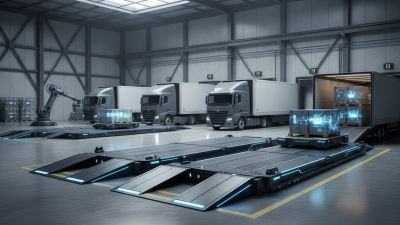
In the realm of logistics, a manual dock leveler plays a crucial role. This equipment allows for seamless loading and unloading between trucks and warehouses. Expert Jakob Miller, a leading voice in material handling, once said, "A manual dock leveler is the bridge that ensures smooth operations." His insight underscores how vital this tool is to operational efficiency.
Understanding how a manual dock leveler works can illuminate its importance. This device features a platform that adjusts to different heights. Workers can easily manage heavy loads when using the leveler. However, the manual aspect means it relies heavily on human operation. Sometimes, operators may overlook safety protocols. This oversight can lead to accidents.
Employing a manual dock leveler does come with challenges. While it's cost-effective, it requires regular maintenance. Operators must be trained to recognize wear and tear. Ignoring these details can hinder productivity and safety. Investing time in training can prevent issues. The manual dock leveler remains essential, but it is not without its complexities. Detailed attention is necessary for optimal use in logistics settings.
What is a Manual Dock Leveler?
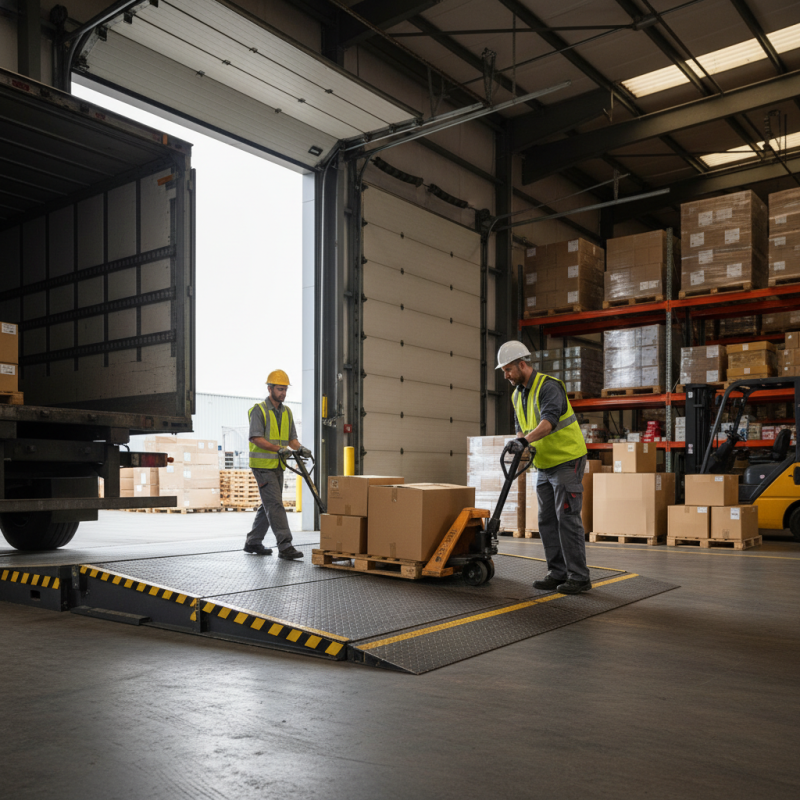
A manual dock leveler is a critical piece of equipment in many warehouses and distribution centers. It allows smooth transfers of goods between trucks and loading docks. According to industry reports, nearly 60% of warehouses use some form of dock leveler for operational efficiency. This tool is often preferred for its simplicity and cost-effectiveness.
Operating a manual dock leveler typically requires one person. The user engages a lever or handle to raise or lower the platform. This process can be less efficient compared to powered dock levelers, especially when dealing with heavy loads. Statistics indicate that manual models can accommodate up to 10,000 pounds; however, frequent use may lead to wear and tear over time.
Some users find it challenging to maintain the correct angle for loading. An improper setup can result in safety hazards or product damage. While manual dock levelers are economical, they may not always meet the speed demands of high-volume operations. In fact, facilities experiencing rapid growth might find themselves in need of upgrading to powered alternatives sooner than expected.
Key Components of a Manual Dock Leveler
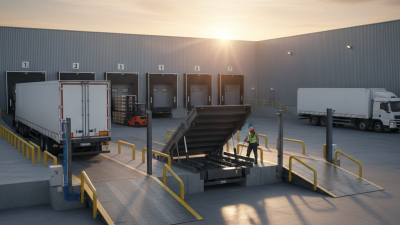
A manual dock leveler is a crucial piece of equipment for loading docks. It bridges the gap between the loading dock and the trailer. Understanding its key components can help ensure efficient operations.
The main parts of a manual dock leveler include the platform, lip, and safety legs. The platform is the flat surface where goods are moved. It usually consists of sturdy steel to withstand heavy loads. The lip extends from the platform to connect to the trailer. This part allows smooth transitions for forklifts or hand trucks. Safety legs provide stability when in use. They prevent the leveler from collapsing during loading or unloading.
Operating a manual dock leveler requires some effort. Operators must pull a lever to lift the platform. It can be exhausting. Sometimes, the lip does not seat properly, causing bumps. Safety checks are necessary to avoid accidents. Regular inspections and maintenance should not be overlooked. A few adjustments can make a significant difference in performance.
How a Manual Dock Leveler Operates
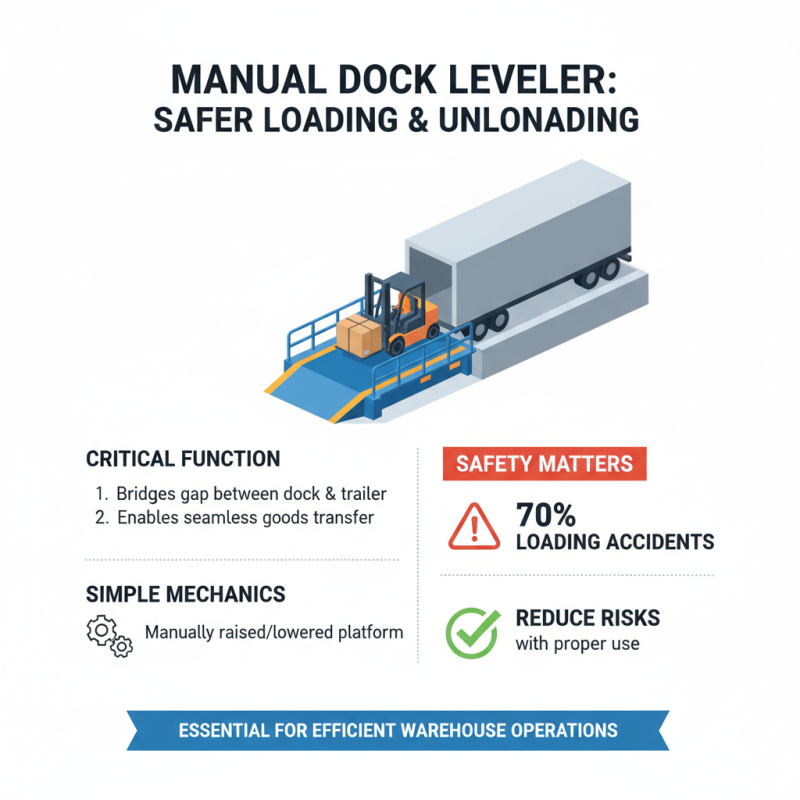
A manual dock leveler serves a critical function in loading and unloading operations at distribution centers. It bridges the gap between a loading dock and a trailer, allowing for seamless transfer of goods. This equipment relies on simple mechanics, often consisting of a platform that can be raised or lowered manually. According to industry studies, around 70% of loading accidents occur due to improper handling of equipment. A well-functioning dock leveler can significantly reduce these risks.
The operation of a manual dock leveler involves a few essential steps. Operators must engage the release mechanism, allowing the platform to move. Once in position, the workers can secure the leveler with safety pins. This straightforward process ensures stability during loading. Data from the Material Handling Industry highlights that enhanced equipment usage can improve efficiency by up to 15%. However, manual dock levelers require ongoing training and reflection on proper handling techniques. Many facilities overlook this, leading to potential accidents.
Workers should perform regular checks on the dock leveler. This maintenance helps to identify mechanical wear. Neglecting these tasks can lead to serious failures during operation. A report from the Occupational Safety and Health Administration suggests that equipment failure is a leading cause of workplace injuries. Thus, emphasizing the importance of diligence in maintenance practices cannot be overstated.
Advantages of Using a Manual Dock Leveler
A manual dock leveler is a simple yet effective solution for loading and unloading operations. It allows smooth transitions between trucks and loading docks. This type of leveler provides flexibility, as it can adjust to various heights. Workers can safely move goods without gaps or steep inclines. This makes manual levelers a popular choice in many warehouses.
Using a manual dock leveler has several advantages. It requires no electrical power, reducing maintenance costs. The operation is straightforward, allowing workers to use it with minimal training. Manual levelers also offer durability due to their robust construction. They withstand heavy loads and harsh conditions. However, it is essential to ensure that staff is trained correctly. Misuse can lead to accidents or product damage.
In many cases, these levelers can be more cost-effective than automated systems. They are a budget-friendly option for smaller operations. Yet, the physical effort required can raise concerns about worker fatigue. Proper ergonomics should be considered. Therefore, while they save money, they may demand more human effort. This balance is crucial in optimizing dock efficiency.
What is a Manual Dock Leveler and How Does It Work? - Advantages of Using a Manual Dock Leveler
| Feature |
Description |
Advantages |
| Manual Operation |
Operated manually using a lever or hand crank. |
Cost-effective and requires no electrical power. |
| Durability |
Constructed of heavy-duty steel materials. |
Long lifespan with low maintenance needs. |
| Weight Capacity |
Can typically handle loads ranging from 20,000 to 30,000 lbs. |
Suitable for a variety of freight handling applications. |
| Height Adjustability |
Allows for height adjustments to align with different truck bed heights. |
Enhances loading and unloading efficiency. |
| Safety Features |
Equipped with safety locks and edge-of-dock designs. |
Provides safe unloading practices and reduces accidents. |
Applications of Manual Dock Levelers in Warehousing
Manual dock levelers play a vital role in warehousing operations. They bridge the gap between trucks and loading docks. This ensures safe and efficient loading and unloading of goods. Often used in distribution centers, they facilitate quick turnarounds. This is crucial for businesses that rely on streamlined processes.
In practice, manual dock levelers are simple yet effective. Workers can adjust them by hand to match the height of the truck. This adjustment helps prevent injuries and product damage. However, using these levelers requires physical effort and sometimes basic training. Workers might hesitate due to safety concerns or skill gaps. Proper usage can minimize these issues.
Many warehouses now prioritize manual dock levelers. They are cost-effective and easy to maintain. Some may overlook ergonomic aspects, leading to potential workplace injuries. Continuous training and supervision can enhance safety. Attention to these details can make operations smoother. Balancing efficiency with safety is always a work in progress.
Applications of Manual Dock Levelers in Warehousing