How to Choose the Right Manual Dock Leveler?

Choosing the right manual dock leveler begins with the loading routine, not the catalog page. A busy warehouse may handle short trailers, uneven dock heights, heavy forklifts, or frequent rain. Each condition changes the equipment decision. Measure the height difference carefully. Check the trailer bed range, platform size, rated capacity, lip extension, and operating clearance. A leveler that feels adequate during a light delivery may struggle under a loaded forklift.

David Michaels, former Assistant Secretary of Labor for Occupational Safety and Health, often emphasized a practical safety principle: “Safety is not a priority; it is a precondition for work.” That idea applies directly here. A manual dock leveler should support controlled movement before speed or low purchase cost. Look for visible hinges, positive lip support, non-slip surfaces, and clear operating instructions. Ask whether one trained employee can raise, position, and return the leveler without awkward lifting. Small details matter. Wet steel matters.

This guide examines the main selection points, including capacity, deck length, dock height, maintenance, and operator safety. It also considers installation realities. A leveler may be technically suitable yet inconvenient for the people using it every hour. That is an easy mistake. We should admit another one: specifications alone cannot predict every site problem. Observe actual trailer traffic, forklift wheel loads, and operator habits before choosing a manual dock leveler. The best decision is practical, documented, and open to correction.

How to Choose the Right Manual Dock Leveler?

Understanding How a Manual Dock Leveler Works

How to Choose the Right Manual Dock Leveler?

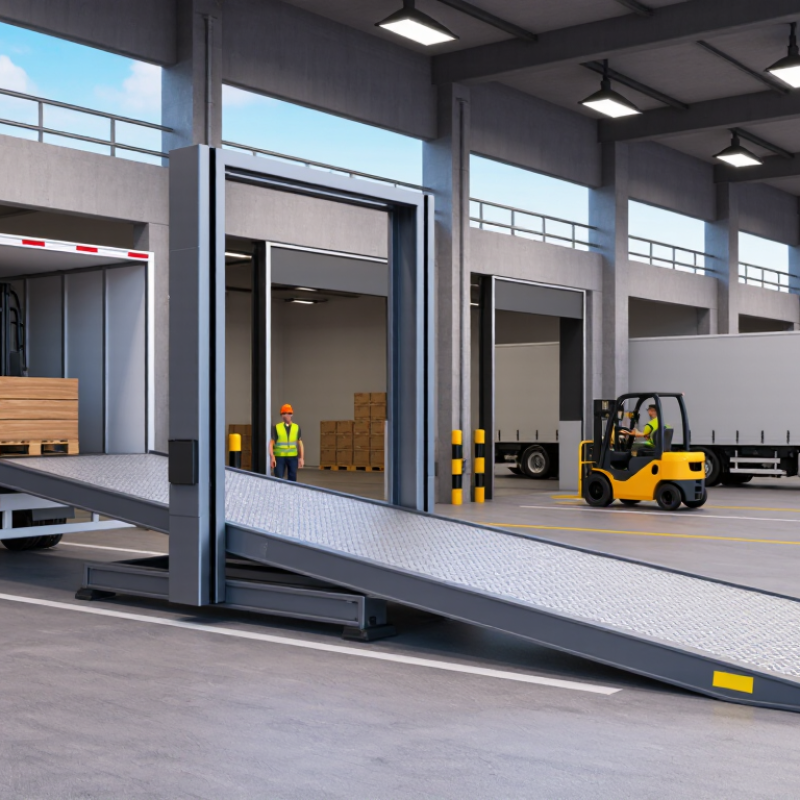
Understanding how a manual dock leveler works is essential before comparing models. The equipment bridges the height gap between a loading dock and a trailer. Its hinged deck rises through a pull chain, spring mechanism, or lifting handle. The lip then extends onto the trailer floor. Once positioned, it creates a smoother path for pallet trucks and forklifts.

A correct selection starts with the load rating. Consider the combined weight of the vehicle, operator, pallet, and equipment. ANSI MH30.1 provides recognized guidance for dock leveler design, performance, and safe use. The dock height also matters. Measure the highest and lowest trailer positions, not only the average height. Small measurement errors can create steep angles and unstable transitions. That is where planning often fails.

Real workplace data shows why these details matter. The U.S. Bureau of Labor Statistics reported 865 fatal falls to a lower level in 2022, within its Census of Fatal Occupational Injuries. This figure does not describe dock levelers alone. It does show the seriousness of height-related risks. Select a leveler with visible safety restraints, reliable maintenance access, and clear operating instructions. Inspect hinges, springs, lip edges, and deck plates regularly. Manual systems are simple, but not maintenance-free. A careful operator may still miss hidden fatigue in a weld or spring. Periodic professional inspection remains sensible.

How to Choose the Right Manual Dock Leveler? - Understanding How a Manual Dock Leveler Works

Selection Dimension Typical Manual Dock Leveler Data How It Works or Why It Matters Recommended Selection Guidance
Operating Method Manual pull-chain, spring-assisted, or handle-operated mechanical system The operator releases or activates the deck and lip mechanism without an electric motor or hydraulic power unit. Choose a manual model when loading frequency is moderate and a simple, low-maintenance solution is preferred.
Rated Capacity Common nominal ratings: approximately 25,000–40,000 lb (11,340–18,140 kg) Capacity represents the combined dynamic load of the forklift, operator, cargo, and other equipment crossing the leveler. Select a capacity higher than the heaviest expected moving load. Confirm the required rating with a qualified supplier or engineer.
Platform Width Common widths: approximately 6 ft, 6.5 ft, and 7 ft (1.83 m, 1.98 m, and 2.13 m) The platform provides the transition surface between the loading dock and the trailer floor. Use the widest practical platform that fits the dock opening and supports safe forklift clearance.
Platform Length Common lengths: approximately 8–10 ft (2.44–3.05 m) A longer deck generally provides a shallower approach angle between the dock and trailer. Choose the length according to the vertical difference between the dock and trailer and the available pit space.
Vertical Dock Range Often designed for a working range of approximately ±12 in (±305 mm), depending on configuration The deck and lip accommodate differences between the dock height and the trailer bed height. Measure the highest and lowest trailer-bed positions before choosing the equipment.
Hinged Lip Common lip lengths: approximately 16–20 in (406–508 mm) The lip extends from the deck and rests on the trailer floor to create a bridge for equipment. Verify that the lip can achieve adequate overlap on the trailer floor while maintaining safe edge clearance.
Lip Overlap A minimum overlap of about 4 in (102 mm) is commonly used as a safety design target Sufficient overlap helps keep the lip supported on the trailer floor during loading operations. Check local regulations, site procedures, and the equipment instructions for the required minimum overlap.
Deck Plate Typically fabricated from formed or diamond-pattern steel plate The deck carries rolling loads and provides traction for forklifts and pallet trucks. Consider plate thickness, structural reinforcement, surface traction, and expected traffic intensity.
Pit Installation Commonly installed in a recessed dock pit; pit depth varies by design The pit supports the leveler and allows the deck to sit near the dock floor when stored. Confirm pit dimensions, front curb angle, rear hinge clearance, drainage, and structural requirements before installation.
Loading Frequency Best suited to low-to-moderate daily loading activity Manual operation requires an operator to position and store the leveler for each loading cycle. For very high cycle rates, compare manual operation with powered equipment to reduce handling time and operator effort.
Maintenance Requirements Periodic inspection, cleaning, lubrication, and fastener checks Mechanical components, hinges, springs, chains, and structural welds are subject to wear. Create a documented inspection schedule and remove the leveler from service if damage or abnormal movement is found.
Safety Features Maintenance struts, stop mechanisms, lip restraints, warning markings, and safety curbs may be included These features help prevent uncontrolled movement and support safe servicing and loading procedures. Verify compliance with applicable workplace-safety standards and require proper operator training.
Trailer Compatibility Suitable for many standard trailers when dock height, bed height, and lip reach are compatible The leveler must maintain stable contact with the trailer throughout the loading process. Review the trailer fleet, including air-ride vehicles, refrigerated trailers, and unusually low or high beds.
Main Advantages No electrical power required, straightforward mechanical design, and generally low operating complexity Fewer powered components can simplify installation and routine servicing. Consider it for facilities that prioritize basic operation, dependable availability, and lower infrastructure requirements.
Main Limitations Requires manual handling and may be less efficient for continuous, high-volume dock traffic Operator effort and cycle time can increase when trailers are processed frequently or when loads are heavy. Compare labor requirements, cycle volume, ergonomics, and total cost before making the final decision.

Assessing Dock Height, Load Capacity, and Vehicle Requirements

How to Choose the Right Manual Dock Leveler?

Assessing Dock Height, Load Capacity, and Vehicle Requirements

Measure the dock height from the yard surface to the loading floor. Do not guess. A few centimeters can create a steep, unstable transition for forklifts and pallet trucks. Record the highest and lowest trailer bed heights used at your facility. Then compare them with the leveler’s vertical range and lip extension.

Load capacity needs careful interpretation. Check the rated capacity for the complete load, including the forklift, operator, pallet, and goods. A forklift carrying 2,000 kilograms may apply more force during turning or braking. Select a suitable safety margin, but avoid relying on an oversized rating alone. The supporting structure must also carry the expected loads.

Vehicle requirements can change the decision. Inspect trailer deck length, rear frame clearance, suspension movement, and bumper position. A short lip may not rest securely inside every vehicle. A long lip may interfere with specific rear designs. Measure real vehicles, not only catalog specifications. Small variations matter.

Manual operation suits facilities with moderate traffic and limited power access. It also demands disciplined inspection and correct positioning. Keep the platform clean, check hinges and welds, and remove damaged equipment from service. It is tempting to choose the cheapest unit after checking capacity. That approach often ignores installation height and vehicle variation. A calculation can still be wrong when site measurements are incomplete. Recheck them before ordering.

Comparing Deck Materials, Lip Designs, and Operating Mechanisms

How to Choose the Right Manual Dock Leveler?

Deck material affects durability, traction, and maintenance. Steel decks handle heavy forklifts and repeated loading well. Aluminum decks resist corrosion and reduce lifting effort. However, aluminum may flex under severe impact. I have found that a textured steel surface offers dependable grip in wet loading areas. Fit matters. Check the deck rating against actual forklift weight, not estimated traffic.

Lip design controls how safely the leveler meets a trailer floor. A hinged lip is simple, strong, and usually easier to inspect. A telescopic lip can reach uneven or recessed trailer floors more accurately. It may require closer cleaning around its moving sections. Lip length also matters. A short lip can create a dangerous gap when trailer positions vary. Measure the working range carefully.

Operating mechanisms influence daily effort and service needs. Spring-assisted manual systems can reduce lifting force without complicated controls. Pull-chain systems are familiar, but operators must use steady movement and avoid standing near pinch points. Mechanical counterbalance designs often provide reliable performance when lubricated and adjusted correctly. Still, “low maintenance” does not mean maintenance-free. Dust, bent hinges, and worn springs can change operating force. I once saw a leveler selected correctly on paper, yet it struggled because the dock pit was poorly aligned. Recheck site conditions before ordering.

How to Choose the Right Manual Dock Leveler?

Comparing deck materials, lip designs, and operating mechanisms using a practical 1–5 engineering score. A higher score indicates stronger suitability for the stated selection factor; actual specifications should be verified against the required load, dock height, traffic, and environment.

Key takeaway: Galvanized steel offers a balanced combination of load capacity and corrosion resistance. Aluminum reduces weight and provides strong corrosion resistance but is generally less suitable for the heaviest applications. Telescopic lips accommodate a wider range of trailer gaps, while spring-assisted and lift-handle mechanisms provide straightforward manual operation.

Checking Safety Features, Installation Needs, and Maintenance Access

Choosing a manual dock leveler starts with safety, not price. Check its rated capacity against loaded forklifts, pallet weights, and impact forces. A small margin matters.

Look for a secure lip extension, non-slip deck, controlled lowering, and visible safety stops. The operating handle should be reachable without standing between moving equipment and the dock edge. Clear instructions should remain near the control point. Workers also need enough lighting to see the lip, trailer floor, and wheel chocks. These details are easy to overlook. They should not be.

Installation depends on more than pit dimensions. Inspect the concrete, dock face, drainage path, and trailer approach angle before ordering. The leveler must sit squarely and remain stable under repeated loading. Measure twice. A few millimeters can affect the transition and create a rough forklift ride. The installation area should also allow safe positioning during adjustment, without blocking emergency routes.

Tips: Leave access to hinges, springs, anchor points, and the underside of the deck. Schedule inspections after heavy use, unusual impacts, or water exposure. Remove dirt from moving joints, but do not treat lubrication as a cure for worn parts. Record damaged welds, bent lips, loose fasteners, and unusual noise. Maintenance access is often planned too late, and that mistake can turn a simple repair into extended downtime. Have qualified personnel follow the leveler’s service instructions and local workplace requirements.

Selecting the Best Manual Dock Leveler for Your Facility Workflow

Choosing the right manual dock leveler starts with facility workflow, not just rated capacity. Measure the dock face, trailer height range, lip reach, and forklift wheelbase. Record the heaviest pallet, including uneven loads. A 72-inch deck may fit one bay but fail at another. Small height differences create sharp forklift angles and unstable pallet transfers.

Keep it practical.

MHI’s 2024 Annual Industry Report found that 55% of supply chain professionals planned to increase technology investment. That trend does not make manual equipment outdated. It highlights the need for reliable, repeatable processes. A manual leveler suits facilities with moderate traffic, changing trailer schedules, or limited electrical access.

Operators need clear handles, strong grip surfaces, visible load markings, and enough clearance for safe positioning.

According to Liberty Mutual’s 2023 Workplace Safety Index, serious workplace injuries cost U.S. employers an estimated $58.5 billion in 2020.

Dock design deserves attention.

Before approval, watch an operator use the leveler with a loaded pallet. Check whether the lip reaches the trailer floor without sudden movement. Inspect hinges, springs, welds, and deck plates regularly. Follow OSHA dockboard requirements, including securing the equipment against movement and observing its rated capacity.

I would not rely on a catalog dimension alone. Real trailers are rarely identical. A short trial can expose awkward lifting, poor visibility, or unnecessary walking. Those details often determine whether the equipment supports the workflow or quietly slows it.