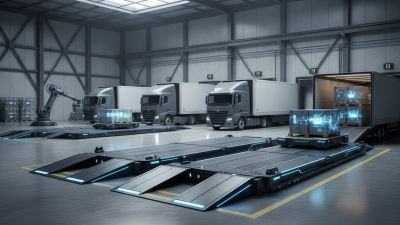
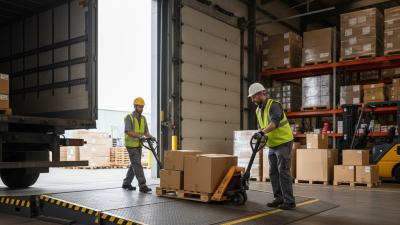
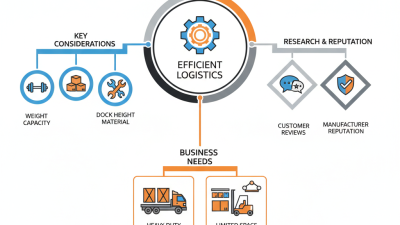
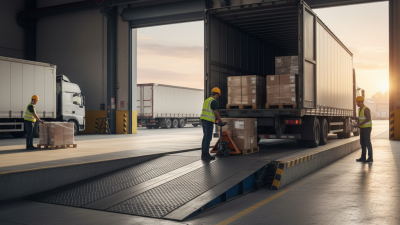
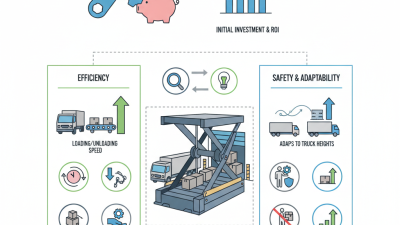
Choosing among the top edge of dock leveler manufacturers worldwide requires more than comparing product photographs or advertised prices. This guide examines manufacturers through practical performance, engineering depth, service support, and verified industry experience. An edge of dock leveler must connect a loading dock and trailer safely, even when vehicle heights vary slightly. Its lip, frame, bumpers, hinges, and operating mechanism deserve close attention.
Real warehouse conditions reveal important differences. A leveler may face repeated forklift traffic, rain, dust, impact, and rushed loading schedules. Reliable manufacturers design for these pressures and provide clear capacity ratings, installation guidance, maintenance instructions, and replacement parts. We also consider certification claims, warranty terms, production consistency, and customer feedback from logistics, manufacturing, and distribution facilities. Details matter.
No ranking is flawless. Regional availability can change. Service quality may depend on local partners. Some published specifications also need independent confirmation. Therefore, this overview encourages buyers to request drawings, test records, reference projects, and total cost estimates before making a decision. A strong supplier should answer practical questions without hiding limitations. That is valuable evidence.
The manufacturers discussed here represent different strengths, including durable construction, compact dock solutions, customized engineering, and responsive technical support. Their suitability depends on trailer traffic, dock height, climate, available space, and operating frequency. A careful comparison helps facility managers avoid selecting equipment that looks capable but performs poorly under daily pressure. Performance comes first.
Dock levelers bridge the gap between a loading dock and a trailer. They create a stable path for forklifts, pallet jacks, and workers. Common types include mechanical, hydraulic, air-powered, and edge-of-dock models. Each design fits different traffic patterns, maintenance plans, and dock structures.
Capacity selection matters. Light operations may need a 20,000-pound rating, while busy distribution centers often require 30,000 to 40,000 pounds. Heavy manufacturing and specialized freight may demand 60,000 to 80,000 pounds. These ratings include the forklift, load, and impact forces, not just the cargo. A careful site review should measure dock height, trailer range, approach angle, and pit dimensions. Small errors here can create expensive problems.
Hydraulic levelers offer controlled movement and convenient operation. Mechanical models can remain useful where simple servicing is preferred. Air-powered systems may suit facilities seeking smooth positioning with fewer mechanical components. Edge-of-dock units work well when space or construction limits a full pit installation. They are often used in smaller warehouses and occasional shipping areas.
Reliable selection also depends on deck thickness, lip length, safety restraints, and weather exposure. Cold storage facilities may need materials and seals suited to low temperatures. Dock teams should inspect welds, hinges, cylinders, and warning markings regularly. A higher capacity is not automatically safer. I have seen specifications chosen from habit rather than actual traffic data. That assumption deserves another review. Even a well-built leveler can perform poorly when installation, training, or trailer alignment is overlooked.
| Dock Leveler Type | Typical Rated Capacity | Common Platform Size | Operating Method | Typical Lip Length | Installation Requirement | Best-Fit Applications | Main Advantages | Key Considerations |
|---|---|---|---|---|---|---|---|---|
| Mechanical Pit Dock Leveler | 25,000–80,000 lb | 6–7 ft wide × 6–8 ft long | Spring-assisted deck with a pull-chain or handle release and mechanical lip extension | 16–20 in | Recessed pit cast into the loading-dock structure | General distribution centers, manufacturing plants, and high-cycle loading docks | Simple construction, no electrical power required, and relatively low operating cost | Requires periodic spring, hinge, lip, and structural inspections; manual operation may be less convenient for high-volume sites |
| Hydraulic Pit Dock Leveler | 30,000–80,000 lb | 6–7 ft wide × 6–8 ft long | Hydraulic cylinder raises the deck and extends or retracts the lip | 16–20 in | Recessed pit with electrical service and hydraulic equipment | High-throughput warehouses, cold-storage facilities, and facilities requiring powered operation | Push-button control, smooth movement, and reduced manual handling | Higher initial cost; hydraulic hoses, cylinders, seals, and electrical components require planned maintenance |
| Air-Powered Dock Leveler | 30,000–80,000 lb | 6–7 ft wide × 6–8 ft long | Industrial air bladder or airbag raises the deck; mechanical or powered action positions the lip | 16–20 in | Recessed pit with electrical connection and a suitable compressed-air system | Food processing, clean operating areas, and facilities seeking low-hydraulic-fluid exposure | Few hydraulic components, smooth deck movement, and generally clean operation | Performance depends on air-system condition; the air source, bladder, controls, and seals need inspection |
| Edge-of-Dock Leveler | 20,000–40,000 lb | Approximately 6–7 ft wide × 18–24 in deep | Deck and lip are mounted at the dock face and operated mechanically or hydraulically | Typically 16–20 in | Bolted or welded to the front edge of an existing dock; no full pit required | Small to medium warehouses, limited dock remodeling, and sites with a narrow trailer height range | Lower installation cost, compact footprint, and faster installation than a recessed pit leveler | Provides less vertical travel than a full pit leveler and is best where truck bed heights are relatively consistent |
| Vertical-Storing Dock Leveler | 20,000–50,000 lb | 6–7 ft wide × 6–8 ft long | Deck stores in a vertical position inside the building; hydraulic or mechanical controls lower it for loading | 16–20 in | Special vertical pit and sufficient interior clearance behind the dock door | Temperature-controlled warehouses, hygienic operations, and facilities requiring a clean dock interface | Allows the dock door to close near the trailer floor and simplifies dock-floor cleaning | Requires compatible building geometry, careful door coordination, and more specialized installation |
| Telescopic-Lip Dock Leveler | 30,000–80,000 lb | 6–7 ft wide × 6–8 ft long | Powered deck with a telescoping lip that extends precisely onto the trailer bed | Adjustable, commonly 16–24 in | Recessed pit with electrical service and powered controls | High-cycle distribution, mixed trailer fleets, and operations needing precise trailer access | Accurate lip placement, broad working range, and good control for varying trailer positions | More moving parts and higher purchase cost; requires regular inspection of the lip mechanism and controls |
| Special-Application Dock Leveler | 40,000–80,000 lb | Project-specific; commonly 7–8 ft wide × 8–10 ft long | Heavy-duty hydraulic or mechanical configuration designed for unusual loads or operating conditions | Project-specific, commonly 20–24 in | Engineered pit, reinforced dock structure, and application-specific safety controls | Heavy manufacturing, steel handling, industrial equipment, and unusually high axle or forklift loads | Can be engineered for demanding load patterns, severe duty cycles, and specialized vehicles | Requires site engineering, load-path verification, and confirmation of actual wheel and axle loads rather than relying only on nominal capacity |