What Are the 2026 Top Mechanical Dock Leveler Types?

As warehouses expand their throughput demands, the mechanical dock leveler remains a practical loading-bay solution. It uses a hinged deck, lip, and spring-assisted mechanism to bridge the height gap between a dock and trailer. Unlike hydraulic systems, it relies on mechanical energy and operator-controlled components. That can simplify maintenance in facilities with limited technical support.

Industry forecasts provide useful context. Grand View Research reports continued growth in the global loading dock equipment market, driven by warehousing, distribution, and e-commerce investment. Fortune Business Insights also identifies logistics infrastructure and faster material handling as major market influences. These reports do not rank every leveler design, however. Their categories vary, and their forecasts should not be treated as exact purchasing instructions.

The 2026 discussion should therefore compare operating conditions, not chase a single “best” model. Standard mechanical dock levelers suit many conventional docks with regular trailer traffic. Spring-assisted models can reduce lifting effort and improve daily usability. Chain-operated designs may offer straightforward control and familiar servicing procedures. Low-profile and edge-of-dock configurations can help where pit construction is restricted, although they may provide a smaller vertical range.

The details matter.

A credible selection also examines load capacity, deck travel, lip length, corrosion exposure, service access, and operator training. ASME guidance and manufacturer test data should support those decisions. Real dock observations are equally important. Watch the trailer suspension, wheel chocks, impact patterns, and damaged lips. Not every dock agrees with a catalog chart. Market reports show direction, while site evidence determines fit. That gap deserves honest review in any 2026 comparison.
What Are the 2026 Top Mechanical Dock Leveler Types?

2026 Mechanical Dock Levelers: ANSI MH30.1 Ratings and Key Terms

What Are the 2026 Top Mechanical Dock Leveler Types?

In 2026, mechanical dock levelers remain practical for busy loading bays. Common choices include pit-mounted, narrow-pit, and edge-of-dock designs.

A pit-mounted model offers broad deck travel and flexible height adjustment. Edge-of-dock units fit facilities with limited structural depth. They usually serve a smaller operating range. That difference matters.

ANSI MH30.1 provides a common framework for safety, performance, installation, and terminology. The rated capacity describes the maximum supported load under defined conditions. It must include the forklift, cargo, and realistic wheel loads. Deck, lip, hold-down, operating range, and below-dock position are key terms. A 30,000-pound rating does not mean every loading pattern is equally safe. Verify the manufacturer’s rating method and site conditions.

Data supports careful selection.

The U.S. Bureau of Labor Statistics reported 1,069 fatal work injuries in transportation and material-moving occupations during 2023. This figure is not dock-specific, but it shows why controlled vehicle-to-building transitions deserve attention. MHI’s 2024 Industry Report also identifies workforce safety and operational reliability as continuing material-handling priorities.

Experience exposes a weakness in many specifications: capacity gets attention, while maintenance access gets ignored. That is a mistake. Inspect the lip hinge, springs, welds, and hold-down system regularly. Consider trailer height variation, forklift wheelbase, weather exposure, and daily cycle volume before choosing a type.

Pit-Mounted Mechanical Levelers: 25,000–50,000-lb Rated Capacity

What Are the 2026 Top Mechanical Dock Leveler Types?

Pit-Mounted Mechanical Levelers: 25,000–50,000-lb Rated Capacity

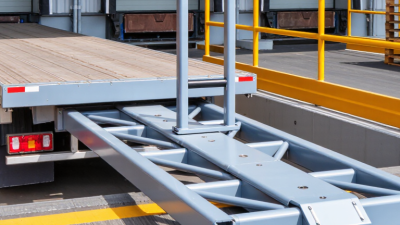
Pit-mounted mechanical dock levelers remain practical for busy loading areas. Their steel deck bridges the trailer gap between the dock and truck bed. Typical rated capacities range from 25,000 to 50,000 pounds. The correct rating depends on forklift weight, cargo weight, wheel loads, and traffic frequency.

A 30,000-pound rating does not mean every load is automatically safe. Load placement matters. A forklift crossing near the deck edge creates different stress than one traveling across the center. During site checks, technicians should confirm pit dimensions, dock height, hinge condition, lip extension, and trailer compatibility. Small mismatches can cause hard impacts, uneven loading, or premature repairs.

These levelers use springs, hinges, and mechanical pull chains instead of powered systems. That design can simplify maintenance and reduce dependence on electrical controls. Operators still need clear training. The deck should sit fully on the trailer floor before crossing. The trailer must also be restrained against unexpected movement. Daily inspections should look for cracked welds, bent lips, loose hardware, and damaged safety components.

Capacity labels are sometimes treated as simple numbers. They are not. Real performance also depends on installation quality and inspection habits. A poorly maintained 50,000-pound leveler may perform worse than a properly serviced lower-capacity unit. I would also question oversized ratings when the dock structure cannot support the transferred forces. Specification sheets help, but field conditions decide the result.

Edge-of-Dock Mechanical Levelers: 20,000–35,000-lb Capacity, 5-in. Lip

What Are the 2026 Top Mechanical Dock Leveler Types?

Edge-of-dock mechanical levelers suit facilities with limited pit depth and repeatable trailer heights. Typical ratings range from 20,000 to 35,000 pounds, with a five-inch lip. That lip bridges the trailer gap during forklift movement. However, rated capacity must cover the combined forklift and load, not the cargo alone. A 25,000-pound rating can be inadequate when a heavy forklift carries dense materials.

ANSI MH30.1 guidance stresses correct capacity selection, secure installation, and controlled deck movement. The U.S. Bureau of Labor Statistics reported 1,942 fatal workplace transportation incidents in 2023. These incidents represented about 36.8% of all fatal occupational injuries. OSHA also identifies dock edges, trailer movement, and poor restraint practices as serious warehouse hazards. Mechanical designs reduce hydraulic complexity, but they still require regular inspection. Worn lip hinges can create a sharp transfer point. That small defect matters. A practical review should check lip extension, deck condition, bumper clearance, and trailer height variation. The five-inch lip is useful, yet it cannot solve every unusual trailer position.

Tips: Confirm the heaviest forklift-load combination before ordering. Measure trailer heights across several shifts. Inspect the lip and hinge weekly. Keep the approach clear and level. Do not treat capacity labels as permission to exceed site procedures. An overlooked measurement can become an expensive lesson.

Spring-Assisted Mechanical Levelers: Manual Control and 12-in. Vertical Range

Spring-Assisted Mechanical Levelers: Manual Control and 12-in. Vertical Range

Spring-assisted mechanical dock levelers remain practical for facilities that value direct control and simple operation. Their spring mechanism helps balance the deck during positioning, while the operator manages the lip and release chain manually. This design uses fewer powered components. It also allows trained staff to understand each movement clearly.

A 12-inch vertical range gives the leveler useful flexibility between the loading dock and different trailer beds. When a trailer sits slightly higher or lower, the deck can follow that change while maintaining a workable bridge. Operators should check the trailer position, deck angle, and lip contact before driving equipment across. Small details matter here. A misplaced wheel chock or uneven approach can create unnecessary impact.

In field inspections, the spring condition deserves close attention. Weak, damaged, or poorly adjusted springs may make the deck feel heavy or unstable. Hinges, welds, chains, and lip edges also need regular examination. The mechanism is durable, but not careless-proof. That assumption can fail.

Manual operation may require more training than push-button equipment. However, it can offer dependable performance when electrical access is limited or maintenance simplicity matters. Staff should follow the leveler’s operating instructions and report unusual noise, sudden movement, or restricted travel immediately. A clear inspection record adds reliability, even when the process feels routine.

What Are the 2026 Top Mechanical Dock Leveler Types? - Spring-Assisted Mechanical Levelers: Manual Control and 12-in. Vertical Range

Evaluation Dimension Typical Specification or Configuration Practical Description Selection Consideration
Leveler Type Spring-assisted mechanical dock leveler A manually operated dock plate with stored-energy springs that assist deck movement and lip extension. Suitable for facilities that prefer a durable mechanical system without hydraulic power units or electrical controls.
Operating Method Manual pull-chain or handle control The operator activates the release mechanism from the dock face, allowing the deck to rise and the lip to extend. Requires a trained operator and a clear operating procedure at every loading position.
Vertical Range Approximately 12 in. above and below dock level A common mechanical configuration accommodates trailer beds that are moderately higher or lower than the dock. Confirm the actual pit design, trailer-height range, and manufacturer-rated operating limits before installation.
Typical Deck Widths Approximately 6 ft to 7 ft Common widths provide space for forklifts and pallet trucks while fitting standard dock openings. Choose a width that matches the doorway, pit dimensions, vehicle clearance, and material-handling equipment.
Typical Deck Lengths Approximately 6 ft to 8 ft Longer decks can reduce the approach angle between the dock and trailer floor. Length should be selected according to the vertical range, dock height, and maximum acceptable slope.
Common Capacity Classes About 25,000 lb to 40,000 lb rated capacity Mechanical levelers are commonly specified for forklift and load-transfer duties within defined rated limits. Capacity must account for the combined weight of the forklift, load, and dynamic forces during crossing.
Load Support Surface Heavy-gauge formed or structural steel deck The deck creates a bridge between the loading dock and the trailer floor. Deck thickness, reinforcement, and fatigue rating should match traffic frequency and equipment type.
Dock Lip Hinged steel lip, commonly around 16 in. The lip extends into the trailer to provide continuous support during loading and unloading. Verify the required lip length, trailer overlap, hinge design, and stored position clearance.
Spring-Assistance System Heavy-duty torsion or extension spring arrangement Springs counterbalance part of the deck weight, reducing the manual effort required for operation. Springs are wear components and should be inspected for corrosion, deformation, breakage, and loss of tension.
Power Requirement No electricity or hydraulic power required The leveler operates through mechanical energy, making it usable during power interruptions. It can reduce installation complexity, but it does not eliminate the need for routine mechanical maintenance.
Cycle Speed Dependent on operator action Deployment and return speed vary with the operator, spring condition, deck weight, and operating sequence. Best suited to loading points where moderate cycle speed is acceptable and manual control is practical.
Safety Restraint Features Maintenance strut, lip hold-down, and controlled-return mechanism These features help prevent unintended deck movement and provide protection during inspection or servicing. Safety devices should be used exactly as specified and never bypassed during normal operation.
Vehicle Protection Controlled deck travel and dock bumpers used with the leveler Dock bumpers absorb trailer impact while the leveler accommodates the height difference after the vehicle is positioned. A leveler is not a substitute for trailer restraints, wheel chocks, warning systems, or proper dock procedures.
Installation Format Primarily pit-mounted The leveler is installed in a recessed dock pit so the stored deck remains near the dock floor. Pit dimensions, structural support, drainage, edge angles, and weld or anchor details must be coordinated before construction.
Maintenance Requirements Routine lubrication, inspection, cleaning, and fastener checks Mechanical joints, hinges, springs, lip components, bumpers, and structural welds require periodic inspection. Maintenance frequency should increase with heavy traffic, outdoor exposure, dust, moisture, or corrosive materials.
Weather Exposure Painted or corrosion-resistant steel options available Protective finishes help reduce corrosion on exposed components, but standing water and damaged coatings remain concerns. Use suitable drainage and select coatings according to the climate, wash-down practice, and chemical exposure.
Best-Fit Applications Warehouses, distribution buildings, manufacturing plants, and moderate-volume loading docks Spring-assisted mechanical levelers work well where simple controls, dependable operation, and low infrastructure requirements are priorities. High-cycle operations may benefit from powered equipment if manual operation becomes a productivity or ergonomic limitation.
Primary Advantages Simple design, no power supply, manual control, and generally straightforward servicing The mechanical design can be practical for facilities seeking a lower-complexity dock-bridging solution. Initial simplicity should be balanced against operator effort, cycle frequency, and ongoing spring and hinge maintenance.
Primary Limitations Manual effort, operator dependency, and limited travel compared with specialized vertical-storing systems Performance depends on correct operation and keeping mechanical parts in serviceable condition. Conduct a site assessment when trailer heights vary widely or when loading activity is continuous.
Recommended Selection Check Confirm capacity, 12-in. vertical range, deck size, lip overlap, pit dimensions, and traffic level These factors determine whether the leveler can safely bridge the intended gap and support the actual loading equipment. Final specifications must be verified against applicable safety requirements, site conditions, and the equipment’s certified rating.

Note: Specifications shown are representative industry ranges for spring-assisted mechanical dock levelers, not a substitute for the certified specifications of a particular installation.

Choosing the Top Type: Capacity, Lip Reach, Cycle Rate, and Maintenance Data

What Are the 2026 Top Mechanical Dock Leveler Types?

Choosing a top mechanical dock leveler starts with the trailer mix and daily workload. Pit-style levelers suit busy facilities needing 30,000 to 50,000 pounds of rated capacity. Their hinged lips usually reach 16 to 20 inches, helping bridge uneven trailer gaps. Edge-of-dock models need less construction work and often provide an 8 to 11-inch lip reach. They fit lighter operations, but limited reach can become a problem with short trailers or poor parking alignment. Vertical-storing designs keep the pit area cleaner, although their installation requirements may narrow the selection.

Cycle rate reveals more than a capacity label. Record actual movements per hour, not only the manufacturer’s maximum figure. A leveler handling 40 cycles per shift may need different components than one handling 150. Maintenance data should include spring replacements, hinge wear, lubrication intervals, and unplanned downtime. In field inspections, rust around the lip hinge often predicts trouble earlier than visible deck damage. Still, inspection notes can be inconsistent. A spreadsheet is not always truth.

Tips: Compare at least six months of service records from similar docks. Measure the real trailer gap before choosing lip reach. Ask operators whether the deck returns smoothly after every load. Keep spare hinge pins and inspect welds quarterly. A slightly oversized capacity may improve safety, but it cannot fix poor alignment or neglected maintenance.

What Are the 2026 Top Mechanical Dock Leveler Types?

Comparison based on representative industry planning values for capacity, lip reach, operating cycle rate, and scheduled maintenance. Actual performance depends on design, installation, loading conditions, and local safety requirements.

How to read the chart: A pit-mounted mechanical leveler generally provides the greatest capacity and lip reach. An edge-of-dock leveler requires less pit construction but usually offers a shorter lip reach. The cycle-rate and maintenance figures are representative planning benchmarks rather than universal manufacturer ratings.