How to Choose the Right Loading Dock Plate?

Choosing the right loading dock plate is a practical decision with serious safety and efficiency implications. A plate may look strong, yet still fail to match your dock height, vehicle type, or material-handling equipment. The correct choice begins with accurate measurements. Record the dock-to-truck height difference, usable opening width, expected load weight, and the equipment crossing the plate.

A reliable loading dock plate should have a clearly stated capacity, durable construction, and secure handling features. Steel plates often suit demanding industrial traffic, while aluminum models can offer easier manual handling. Check the manufacturer’s rated capacity, not just the plate’s appearance. A loaded pallet jack creates different stresses than an empty cart. Forklift traffic requires even more careful evaluation. Surface traction, side curbs, lifting chains, and storage conditions also deserve attention.

Real warehouse conditions can expose weaknesses that product brochures miss. Dust may reduce grip. Rain can make an untreated surface slippery. Repeated impacts may damage hinges, edges, or welds. Inspect the plate before each shift, and remove it from service when bending, cracking, or distortion appears. A common mistake is choosing the thickest plate without checking fit and handling requirements. That assumption needs a second look. Consultation with the manufacturer, a qualified dock professional, and your site safety team can prevent costly errors. This guide explains the main selection factors, while recognizing that every loading area has different risks, traffic patterns, and operating habits. Measure carefully. Then compare options against real daily use, not ideal conditions.
How to Choose the Right Loading Dock Plate?

What Is a Loading Dock Plate and How Does It Work?

How to Choose the Right Loading Dock Plate?

What Is a Loading Dock Plate and How Does It Work?

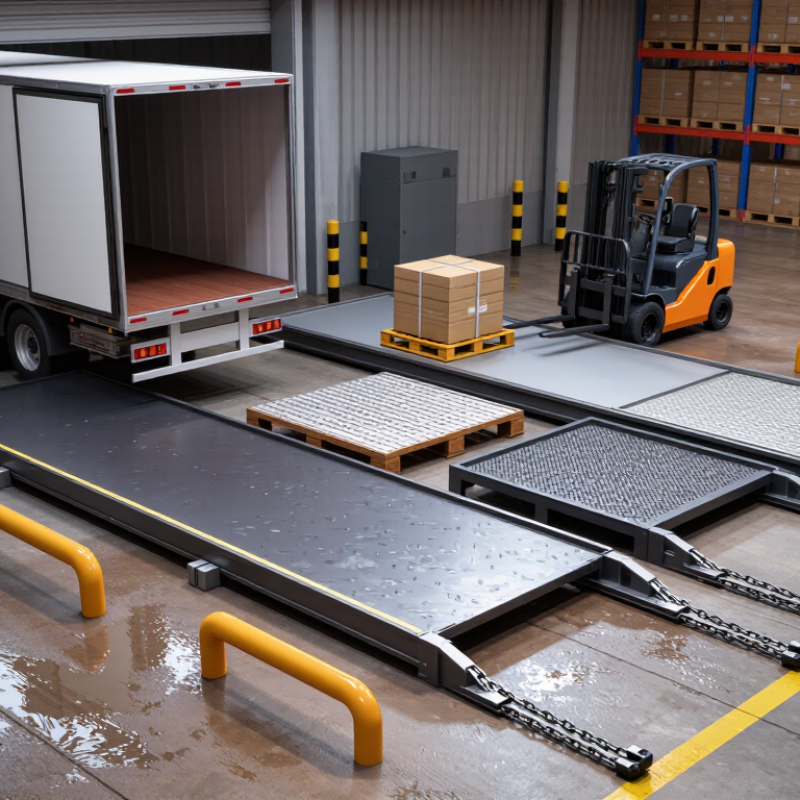
A loading dock plate is a portable metal bridge between a dock and a truck bed. It covers the height gap, allowing pallet jacks and carts to cross safely. Its raised edges help prevent equipment from sliding sideways. Many plates also include hand holes for controlled positioning.

The plate works through load transfer. Its lip rests on the truck floor, while the rear section sits on the dock edge. Weight then spreads across the plate instead of concentrating on one weak point. OSHA’s 29 CFR 1910.26 requires dockboards to support their maximum intended load and remain secured during use. That means capacity is not a suggestion.

Check the combined weight of the equipment, cargo, and operator. Then compare it with the plate’s rated capacity. A 2,000-pound pallet moved by a 700-pound pallet jack already creates a serious calculation. Add uneven flooring, truck movement, and repeated impacts. The margin can disappear quickly.

The Occupational Safety and Health Administration also recommends safe access and secure positioning around loading areas. Surface texture matters when rain, dust, or oil reaches the metal. A clean plate may still become slippery.

Measure the dock height and trailer bed carefully. Small height differences change the plate’s slope and contact area. In real facilities, measurements are sometimes rushed. That is where a neat selection can fail. Recheck the dimensions during different trailer conditions, then inspect the plate before every shift.

Sources: OSHA, 29 CFR 1910.26; OSHA, Recommended Practices for Safety and Health Programs.

Which Loading Dock Plate Type Fits Your Operations?

Choosing the right loading dock plate starts with understanding your daily movement, not just the dock opening. A lightweight aluminum plate may suit hand trucks and occasional deliveries. It is easier to position and resists surface corrosion. Heavy steel plates better support loaded forklifts and repeated traffic. They are stronger, but harder to handle.

Measure the vertical gap, horizontal distance, and available landing space before selecting a plate. A plate that is too short can create a steep approach. A plate that is too narrow may leave wheels close to the edge. Check the rated capacity against the total load, including the forklift and pallet. That detail is often missed. It should not be.

Your operating environment also matters. Wet docks need a surface that maintains traction during rain, snow, or spilled liquids. Busy facilities may need reinforced curbs, secure positioning features, and frequent inspection points. Match the plate to your equipment’s wheel size and turning pattern. A pallet jack may work well on one design but struggle across another.

I have learned that visual confidence can be misleading. A plate may look solid while showing hidden fatigue near hinges, edges, or welds. Inspect it before each shift, especially after impact or unusual loading. Follow applicable workplace safety standards and the manufacturer’s capacity instructions. If operations change, reassess the plate instead of assuming the original choice still fits.

How to Calculate the Required Capacity and Dimensions

Choosing the right loading dock plate starts with the actual moving load, not the pallet label. Add the forklift’s operating weight, cargo, pallet, attachments, and any material left on the plate. Calculate capacity using the heaviest expected combination. Then include the manufacturer’s required safety factor. Never size the plate by total weight alone. Concentrated wheel loads and sudden braking can create greater stress.

For dimensions, measure the dock gap, height difference, landing space, and vehicle width. The plate’s clear width should exceed the widest wheel or load envelope, with practical side clearance. Its length must bridge the gap while keeping the operating slope within the manufacturer’s limits. OSHA 29 CFR 1910.26 requires dockboards to carry imposed loads and remain secured. OSHA and NIOSH safety summaries cite roughly 85 forklift fatalities and 34,900 serious injuries annually in the United States. A neat calculation can still mislead when field measurements are rushed.

Tips: Record the forklift’s data plate rating and the heaviest pallet weight. Recheck both wheel spacing and edge clearance. Specify capacity for dynamic loading, not static storage. Ask a qualified engineer to review unusual gaps, tilted trailers, or uneven surfaces. Small errors matter. One overlooked attachment may invalidate the calculation.

What Safety Features and Standards Should You Check?

How to Choose the Right Loading Dock Plate?

A loading dock plate must match the vehicle height, dock gap, and heaviest rolling load. Check its rated capacity, width, length, and usable lip before purchase. The rating should cover the forklift, pallet, and cargo together. A narrow plate may leave a dangerous wheel edge exposed. Measure twice. Mistakes happen.

OSHA 29 CFR 1910.26 requires portable dockboards to be secured and equipped with safe handholds or other handling devices. Look for locking chains, anti-slip surfaces, visible edge markings, and a lip that sits fully on the trailer floor. The plate should not rock when a loaded pallet crosses it. ANSI MH30.1 also provides recognized guidance for vehicle loading and unloading equipment, including structural safety and operating controls. Ask for documented testing, not verbal assurance.

The Bureau of Labor Statistics reported 1,053 fatal work injuries in transportation and material-moving occupations in its 2023 Census of Fatal Occupational Injuries. This figure is broader than dock incidents, but it shows why small access points deserve serious attention. Inspect welds, hinges, chains, and the trailer floor before every shift. Watch for bent edges, oil, ice, and hidden floor damage. A clean checklist helps, but it can still fail when workers rush. Train operators to stop when the plate shifts, even slightly. Safety depends on the equipment and the decision to use it correctly.

How to Choose the Right Loading Dock Plate? - What Safety Features and Standards Should You Check?

Selection Dimension What to Check Reliable Requirement or Benchmark Why It Matters Priority
Rated Load Capacity Confirm the combined weight of the pallet, load, pallet jack, forklift, or other equipment that will cross the plate. The plate must be designed to support the maximum intended load. Include the actual wheel or axle loading and foreseeable dynamic forces. Overloading can cause permanent deformation, loss of stability, or structural failure. Critical
Clear Span and Width Measure the gap between the dock and vehicle, the usable dock width, and the equipment’s turning and wheel paths. Select dimensions that provide stable bearing on both surfaces and sufficient clearance for the intended traffic path. Follow the manufacturer’s minimum bearing and gap limits. Insufficient bearing or excessive span may allow the plate to shift, bend, or separate from the dock. Critical
Dock-to-Vehicle Height Difference Measure the vertical difference between the dock floor and the vehicle bed under normal loading conditions. Verify that the plate’s working angle and length are suitable for the measured height difference and the equipment’s ground clearance. An unsuitable angle increases rolling resistance, impact forces, and the risk of equipment overturning or losing its load. Critical
Anti-Slip Surface Inspect the surface pattern, drainage capability, and resistance to oil, water, snow, and other contaminants. Use a slip-resistant surface appropriate for the operating environment; keep it clean and free from accumulated contaminants. Reduced traction can cause pedestrians, pallet jacks, or loads to slide unexpectedly. High
Positive Securing System Check for anchoring devices, locking features, curb stops, lip retainers, or other systems that prevent movement. Portable dockboards must be secured in position or equipped with devices that prevent slipping. The securing method must suit the vehicle and dock configuration. Movement during loading can create a sudden gap or uneven transition. Critical
Handholds and Manual Handling Look for integrated handholds or other effective means for safe positioning and removal. Portable dockboards should provide handholds or equivalent handling provisions, with weight and handling procedures suitable for the workers involved. Proper handling features reduce pinch, crush, and manual-lifting injuries. High
Edge Protection and Transition Check side edges, raised curbs, tapered transitions, and the exposed gap at both ends. Provide positive protection against lateral wheel movement and ensure the plate sits securely without creating an avoidable trip edge. Edge protection helps prevent wheels, feet, and pallet loads from leaving the usable surface. High
Vehicle Restraint and Wheel Chocking Verify that the loading procedure requires the vehicle to be parked squarely, brakes set, and wheels chocked or mechanically restrained where applicable. A dock plate is not a substitute for controlling vehicle movement. Use a documented vehicle-restraint procedure consistent with site regulations. Unexpected vehicle movement can dislodge the plate and expose workers to falls or crushing hazards. Critical
Material and Construction Review the plate material, weld quality, hinge or lip construction, surface condition, and corrosion resistance. Choose construction suitable for the expected loads, traffic frequency, weather, chemicals, and temperature range. Inspect for cracks, bent sections, and damaged welds. Environmental damage and fatigue can reduce the rated capacity over time. High
Safety Standards and Documentation Request the rated capacity, operating instructions, inspection criteria, and applicable conformity or test documentation. For United States workplaces, review OSHA 29 CFR 1910.26, “Dockboards.” Where applicable, also check local building, workplace-safety, and machinery requirements. Dock-leveler applications may fall under EN 1398 in relevant European markets. Applicable standards establish baseline requirements for strength, securing, handling, and safe operation. Critical
Inspection and Maintenance Establish pre-use checks for cracks, deformation, loose hardware, damaged securing devices, contamination, and unreadable capacity markings. Remove a damaged or questionable plate from service until it has been evaluated and repaired or replaced by a competent person. Routine inspection detects defects before they become loading or fall incidents. High

How to Inspect, Install, and Maintain a Dock Plate?

How to Inspect, Install, and Maintain a Dock Plate?

A dock plate must match the trailer gap, load weight, and forklift traffic. OSHA 29 CFR 1910.26 requires dockboards to support imposed loads and remain securely positioned. Before every shift, inspect the plate’s surface, edges, curbs, welds, and lifting chain. Look for bent metal, deep corrosion, cracked welds, or missing hardware. Small defects can become serious under moving loads.

Keep the inspection practical. Place the plate on a level surface and check for rocking or visible distortion. Confirm that the lip sits fully on the trailer floor, not on a damaged edge. Remove oil, ice, and loose packaging. The 2023 Bureau of Labor Statistics Census reported 885 fatal work injuries involving falls, slips, and trips. A dock plate is only one part of that risk. Poor housekeeping still matters.

During installation, secure the plate before equipment crosses it. Keep the approach straight and reduce speed near the transition. Never exceed the marked capacity, even briefly. Maintenance records should include inspection dates, defects, repairs, and the person responsible. A checklist helps, but it is not magic. Workers may still overlook a worn hinge or a shifting trailer. Reinspect after impact, relocation, severe weather, or unusual loading. OSHA also requires dockboards to provide safe access, yet real conditions can change faster than paperwork. That is where judgment matters.

How to Choose the Right Loading Dock Plate?

How to Inspect, Install, and Maintain a Dock Plate?

How to use this chart: The values show representative dock plate capacity ratings commonly specified for light-, medium-, and heavy-duty applications. Always verify the manufacturer’s nameplate, vehicle and forklift weights, wheel loads, plate dimensions, and safety margin before selecting a plate.

Inspection: Check the plate, curbs, welds, hinges, lifting handles, anchoring devices, and walking surface before every use. Do not use a plate with cracks, deformation, loose hardware, or a missing capacity marking.

Installation and maintenance: Center the plate across the gap, secure it against movement, confirm that it provides adequate overlap, and keep the surface clean and dry. Remove damaged equipment from service until it has been repaired or replaced.