10 Loading Dock Safety Tips for Global Buyers?

For global buyers, loading docks are more than transfer points between trucks and warehouses. They are busy work zones where forklifts, trailers, pallets, and people move within narrow spaces. A small mistake can damage goods, delay shipments, or cause serious injuries.

This guide presents ten practical loading dock safety tips for international purchasing teams. It focuses on conditions buyers can observe during supplier visits, factory audits, and pre-shipment inspections. Look for clear traffic lanes, visible dock edges, stable dock plates, working trailer restraints, and adequate lighting. Check whether workers use suitable footwear, high-visibility clothing, gloves, and other required protective equipment. Ask how damaged pallets, unstable loads, and leaking containers are handled.

Simple details matter. A wet floor near a dock door can become dangerously slippery. Poorly placed cartons may block an emergency exit or hide a warning sign. Buyers should also review loading procedures, equipment maintenance records, training practices, and communication between drivers and warehouse staff. These checks support safer sourcing and more reliable delivery performance.

No inspection is perfect. A clean dock during a short visit may not reflect peak-season pressure, heavy rain, or night operations. That limitation deserves attention. Ask for recent incident records, observe a live loading task, and speak with responsible supervisors. Safety expectations can differ across countries, so buyers should confirm applicable local requirements with qualified professionals. Practical evidence remains stronger than attractive paperwork. Safety starts on site.
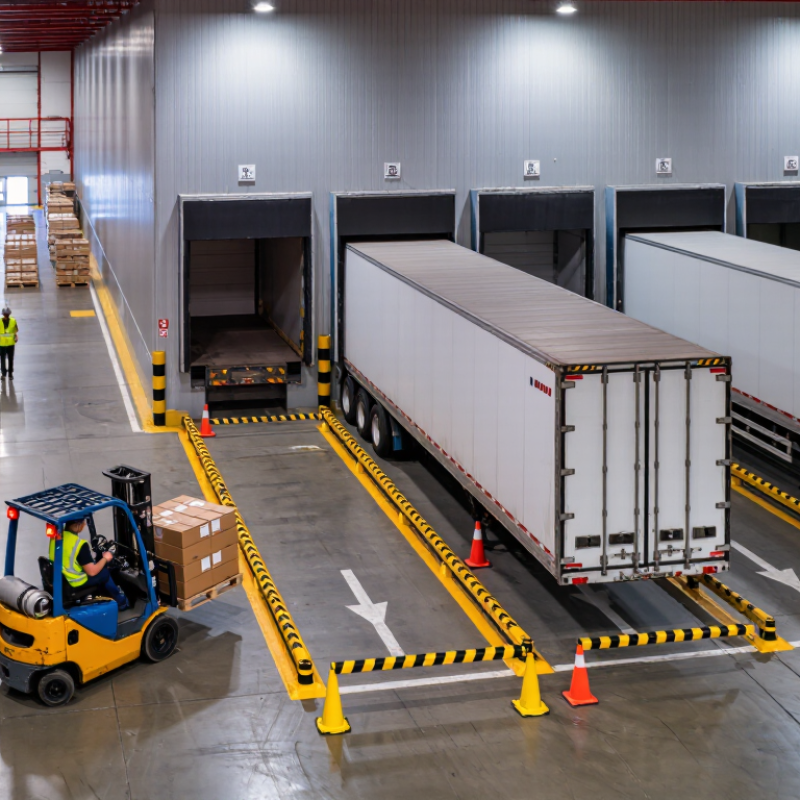
10 Loading Dock Safety Tips for Global Buyers?

Understand Global Loading Dock Hazards and Safety Standards

10 Loading Dock Safety Tips for Global Buyers

Understand Global Loading Dock Hazards and Safety Standards

A loading dock combines moving trucks, forklifts, raised platforms, and uneven surfaces. OSHA estimates that powered industrial trucks cause about 85 annual fatalities and 34,900 serious injuries in the United States. HSE reports that workplace transport causes roughly one quarter of workplace deaths involving vehicles. These figures show why dock safety requires more than visible warning signs. A trailer can move unexpectedly when its brakes fail, wheels shift, or communication breaks down.

Global buyers should check whether dock levellers meet EN 1398 safety requirements. Forklift operations should follow OSHA 1910.178 or equivalent local rules. ISO 45001 can support a broader occupational safety management system. However, certificates alone cannot prove safe daily operation. Ask for load testing, emergency-stop performance, maintenance records, and clear instructions in the operator’s language. Guards should prevent falls from open dock edges. Restraints or wheel chocks should control trailer movement. Good lighting matters, especially around narrow dock plates and wet floors.

Watch the real workflow during supplier inspections. Can a driver see the signal person? Can workers escape if a trailer leaves early? Are pedestrians separated from forklifts by physical barriers? These practical checks often reveal weaknesses that documents miss. Even experienced teams overlook small gaps, such as damaged dock bumpers or poorly positioned controls. Safety standards provide a foundation, but local risk assessments and repeated training make that foundation usable.
Evaluate Dock Design, Equipment, and Workplace Conditions

10 Loading Dock Safety Tips for Global Buyers

Evaluate Dock Design, Equipment, and Workplace Conditions

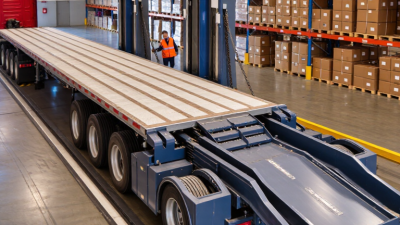
A safe loading dock begins with its physical layout. Measure trailer clearance, dock height, turning space, and pedestrian routes before purchasing equipment. Check whether doors open fully without striking lights or stored materials. Uneven floors deserve attention. Water, oil, and broken concrete can cause sudden slips or unstable vehicle movement. In my experience, a polished drawing may hide poor drainage or limited visibility. Visit the site during a busy shift, not only during a quiet inspection.

Tips: 1. Mark separate vehicle and walking lanes. 2. Install visible edge protection. 3. Match dock levelers to common trailer heights. 4. Check load capacity and emergency stops. 5. Keep wheel chocks or restraint systems accessible. 6. Test warning lights in daylight. 7. Inspect dock plates for cracks. 8. Protect cables from forklifts. 9. Provide bright, even lighting. 10. Keep exits clear.

Equipment quality is only part of the risk. Operators need practical training, clear signals, and enough room to react. Observe forklift traffic, noise, weather exposure, and shift fatigue. A warning sign cannot correct a confusing workflow. Maintenance records should show inspections, repairs, and recurring defects. Ask who performs each check and what happens after a failure. Details matter. Still, no checklist is perfect. Seasonal rain, unfamiliar drivers, or rushed deliveries may expose weaknesses that routine reviews miss. Use qualified local safety professionals to verify the design against applicable requirements.

10 Loading Dock Safety Tips for Global Buyers – Evaluate Dock Design, Equipment, and Workplace Conditions

Practical evaluation criteria for comparing loading-dock safety conditions across suppliers and facilities

No. Safety Area What to Evaluate Recommended Verification Criteria Evidence to Request Main Risk Controlled Priority
1 Dock Leveler and Load Capacity Check whether the dock leveler bridges the height and gap between the vehicle floor and the loading platform without creating an abrupt transition. The leveler should be secured in position and have a clearly marked rated capacity. Its rated capacity must meet or exceed the heaviest planned wheel or axle loading, including dynamic loading from material-handling equipment. No visible deformation, damaged lip, or excessive gap. Capacity plate, equipment specification, maintenance log, and photographs showing the leveler in both stored and deployed positions. Forklift overturns, falls, structural failure, and load displacement. High
2 Vehicle Restraint and Wheel Chocking Confirm how trucks and trailers are prevented from moving during loading or unloading. The vehicle parking brake must be applied, and wheel chocks or an effective vehicle-restraint system must be used before personnel or powered industrial trucks enter the trailer. The procedure should also address trailer creep, early departure, and communication between the dock and driver. Written loading procedure, chock or restraint inspection records, operator interview, and observation of a live loading cycle. Trailer movement, separation from the dock, crush injuries, and falls into gaps. High
3 Open-Dock Edge Protection Inspect exposed dock edges, unused bays, side edges, and areas where a leveler is not deployed. Open edges should be protected with a suitable guardrail, gate, chain, barrier, or equivalent system wherever required by the applicable local regulation. Where guardrails are used, a common general-industry reference is a top rail approximately 42 inches (107 cm) above the walking surface, with an intermediate rail or equivalent protection. Site layout, guardrail dimensions, gate function test, and local regulatory compliance checklist. People, forklifts, and materials falling from the dock. High
4 Dockboard and Bridge Plate Safety Evaluate portable dockboards, bridge plates, and ramps used to span gaps or height differences. Each unit should have a visible rated capacity, adequate traction, positive positioning, and a means of preventing displacement. The bridge must be long and wide enough for the planned equipment, and its slope must remain within the equipment manufacturer’s safe operating limits. Rated-capacity marking, inspection checklist, anti-slip surface condition, securing method, and operator training record. Bridge movement, forklift rollover, slips, and falls between the vehicle and dock. High
5 Forklift and Pedestrian Separation Review the physical and procedural separation of pedestrians from forklifts and other industrial vehicles. Provide clearly marked pedestrian routes, physical barriers where practical, designated crossing points, and visibility controls at blind corners. Site speed limits should be based on traffic, floor condition, visibility, load type, and local risk assessment rather than using one universal value. Traffic-management plan, floor markings, barrier inspection records, forklift route map, and worker interviews. Vehicle-pedestrian collisions, struck-by incidents, and reversing accidents. High
6 Lighting and Visibility Assess lighting inside the trailer, on the dock platform, at the leveler, and along pedestrian routes. Lighting should allow workers to identify dock edges, load condition, floor hazards, vehicle movement, and warning signs without glare or strong shadows. The buyer should compare measured illumination with the applicable local workplace requirement and document any dark zones. Illumination measurement records, lighting-maintenance log, photographs from the operator’s viewpoint, and corrective-action records. Missteps, collisions, incorrect loading, and failure to see damaged equipment. Medium
7 Floor, Surface, and Weather Conditions Check dock floors, trailer floors, ramps, drainage, and exposure to rain, ice, dust, oil, or other contaminants. Walking and driving surfaces should be stable, reasonably level, free of major cracks and potholes, and maintained to prevent slip hazards. Water should drain away from the dock edge, and procedures should define how wet, icy, oily, or contaminated surfaces are isolated and cleaned. Housekeeping schedule, drainage inspection, floor-repair records, spill-response procedure, and seasonal weather controls. Slips, trips, forklift skidding, load instability, and falls from the dock. High
8 Dock Doors and Traffic Controls Inspect overhead doors, vehicle clearance, door interlocks, warning lights, and traffic signals. Doors should open and close smoothly, remain secured in the intended position, and provide sufficient clearance for the planned vehicle and load. Loading should not begin until the door, trailer, dock leveler, and vehicle-restraint status are confirmed. Door inspection records, clearance measurements, warning-signal test results, lockout procedure, and emergency-stop test records. Door impact, premature vehicle movement, falling objects, and trapped personnel. High
9 Inspection and Preventive Maintenance Determine whether dock equipment is inspected before use and maintained according to manufacturer instructions and local requirements. Pre-use checks should cover levelers, dockboards, restraints, chocks, doors, lights, barriers, bumpers, and warning systems. Defective equipment must be removed from service, clearly identified, and repaired before reuse. Daily or shift inspection forms, preventive-maintenance schedule, defect tags, repair completion records, and calibration certificates where applicable. Equipment failure, unplanned downtime, and incidents caused by known defects. High
10 Training, Communication, and Emergency Response Verify that workers, drivers, visitors, and contractors understand the dock’s hazards and communication signals. Training should cover vehicle restraint, dockboard use, forklift and pedestrian rules, fall hazards, emergency stops, spill response, and incident reporting. Refresher training should be provided after an incident, unsafe observation, equipment change, or demonstrated lack of proficiency. Training matrix, attendance records, competency assessments, multilingual signage, emergency contacts, and drill records. Unsafe behavior, delayed emergency response, language-related misunderstandings, and repeat incidents. High

Verify Vehicle Positioning, Dock Locks, and Restraint Systems

Loading dock safety depends on controlling vehicle movement before anyone enters the trailer. Begin with clear positioning marks on the apron. The driver should align the trailer with the dock face, stop fully, and set the parking brake. Poor alignment can leave a dangerous gap or shift the trailer during loading.

Check the dock lock or restraint system before opening the door. Confirm that it has engaged the trailer’s rear impact guard or approved restraint point. A visible status signal helps, but it is not enough. Inspectors should also verify the mechanical connection, control panel, and emergency release. The restraint must match the trailer types used at the site. Some global shipments arrive with different frames, heights, or rear guard designs. Compatibility needs proof, not assumption.

Use wheel chocks when required by the site risk assessment, especially where restraint engagement is uncertain. Keep the driver in a designated safe area, away from the trailer gap and loading path. Test interlocks so the dock leveler cannot operate before restraint confirmation. Inspect chains, hooks, sensors, and warning lights for damage, dirt, or corrosion. Record each check with the trailer number, time, and operator initials.

Small failures matter. A restraint can look engaged while holding poorly. Weather, rushed handovers, and unfamiliar drivers create additional risk. A checklist may be completed perfectly and still miss a bad alignment. Review near misses, question routine habits, and adjust procedures when real dock conditions expose weaknesses.

Establish Safe Loading Procedures and Worker Communication

10 Loading Dock Safety Tips for Global Buyers

Safe loading begins with communication, not equipment. Before a truck arrives, assign one trained dock coordinator. This person confirms the trailer, cargo, dock plate, and driver instructions. Use a short pre-loading briefing. Show the driver where to wait, when to move, and who controls the signals. Clear hand signals matter when engines drown out speech. Written instructions should use simple language, pictograms, and local translations. The International Labour Organization reports that occupational accidents and diseases cause nearly three million deaths annually, reinforcing the need for disciplined prevention. At the dock, small misunderstandings can become serious events.

Workers should inspect wheel restraints, dock plates, lighting, floors, and trailer conditions before entry. Keep pedestrians outside marked vehicle zones. Never allow loading while a driver or another worker remains inside an unsecured trailer. The UK Health and Safety Executive notes that workplace transport is involved in about one-quarter of workplace deaths. That figure deserves attention. The U.S. Bureau of Labor Statistics recorded 1,069 fatal work injuries in transportation and material-moving occupations in 2022. Buyers should request training records, inspection logs, incident reviews, and evidence of corrective actions from suppliers. A radio is useful, but it is not a procedure. Our own safety reviews sometimes find that workers understand the rules but hesitate to stop rushed operations. That gap needs honest discussion. Encourage every worker to call “stop” without punishment, then investigate whether schedules, language barriers, or unclear authority created the pressure.

Review Supplier Compliance, Training, and Ongoing Safety Inspections

10 Loading Dock Safety Tips for Global Buyers

Supplier compliance should be checked before purchase orders are approved. Ask for documented dock procedures, equipment records, incident logs, and corrective actions. OSHA estimates that powered industrial trucks cause about 85 workplace deaths and 34,900 serious injuries annually. The International Labour Organization reported nearly 3 million work-related deaths worldwide in 2019. These figures make supplier verification practical, not decorative.

Tips: Confirm dock leveler inspections. Check trailer restraint systems. Separate pedestrians from forklifts. Mark walking lanes clearly. Verify operator training records. Review refresher training dates. Test emergency lighting. Keep dock plates dry. Inspect wheel chocks before loading. Record every defect and repair. A checklist alone is not proof. Watch an actual shift. A wet floor may reveal more than a polished audit file.

Ongoing inspections should follow a written schedule and local operating conditions. Supervisors can inspect lights, guardrails, alarms, plates, and trailer floors before each shift. Monthly reviews should compare near misses, damaged pallets, and repeated delays. Supplier training should include blind corners, unstable loads, reversing signals, and communication barriers across languages. Ask workers to demonstrate the procedure, not merely sign attendance sheets. Paperwork can look complete while a damaged restraint sits beside the bay. Buyers should document findings, assign owners, and set realistic closure dates. Some sites will miss a check. The response matters. Review evidence again.

10 Loading Dock Safety Tips for Global Buyers

Checklist coverage by supplier-compliance evidence area

This checklist groups ten practical buyer checks into three evidence areas: supplier compliance, worker training, and ongoing safety inspections. Buyers should request documented procedures, training records, corrective-action logs, and recent inspection results before approving a loading-dock supplier.